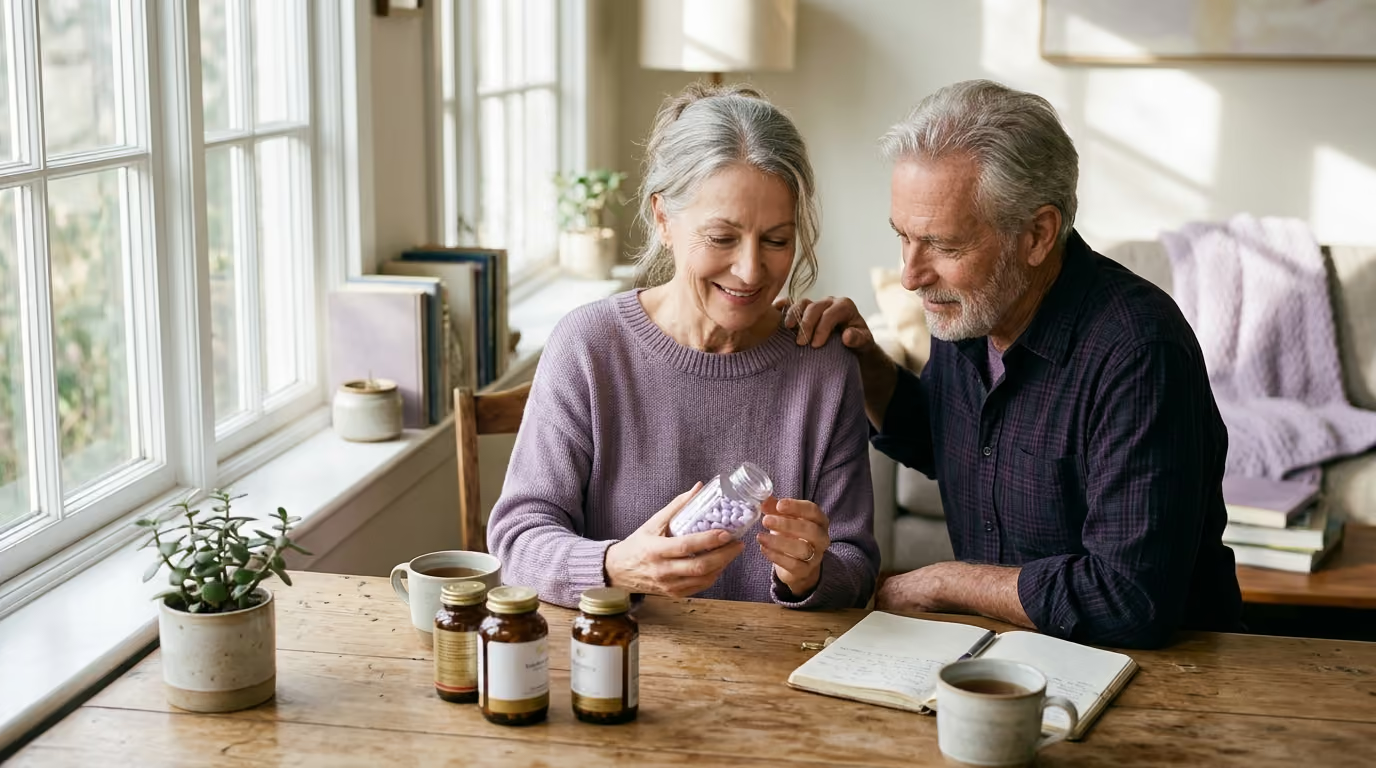

Clear guidance on sexual wellness supplements helps you evaluate scientific evidence, avoid dangerous medication interactions, and understand aging-related vascular and hormonal changes.





You notice that physical responses feel slower than they used to. Perhaps spontaneous desire occurs less frequently, or an erection takes more direct stimulation to maintain. An online advertisement appears, promising to restore youthful vitality, balance hormones, and revive your intimacy using an all-natural herbal formula.
The promise of an easy solution in a bottle is understandable. As our bodies change through midlife and beyond, navigating shifts in sexual response can raise questions about our health, vitality, and relationships.
The straightforward reality is that the vast majority of over-the-counter sexual wellness supplements do not have rigorous evidence demonstrating meaningful improvements in sexual function. Unlike prescription medications, dietary supplements are not reviewed or approved by regulatory agencies for safety and effectiveness before they reach store shelves. Some products contain unlisted pharmaceutical ingredients or botanical extracts that carry genuine health risks, particularly when combined with routine midlife medications.
Understanding how to evaluate product claims, inspect the scientific evidence, and recognize what your body actually needs allows you to protect your health while pursuing satisfying intimacy across adulthood.
Commercial products for sexual wellness often bundle distinct biological processes into broad marketing concepts like vitality, stamina, or virility. Human sexual response is not a single bodily system. It is an intricate coordination of vascular flow, neurological signaling, endocrine balance, psychological state, and interpersonal connection.
When an advertisement claims a capsule supports male drive or female passion, it rarely defines what endpoint was tested. A product cannot simply improve sexual health in the abstract. A person may experience changes in desire, arousal, genital blood flow, lubrication, orgasm intensity, or physical comfort during intimacy. Each of these concerns stems from different underlying mechanisms.
A useful framework for evaluating any product claim is to separate three distinct elements:
For instance, low sexual desire is a symptom. A company may claim its supplement raises serum testosterone, which is a proposed mechanism. However, unless the company provides clinical trials showing that their exact formula reliably improves shifts in desire and arousal in human beings without causing harm, the claim remains unproven.
Marketing language often blurs the line between a laboratory observation and a real-world benefit. A botanical extract might increase blood flow in an isolated tissue sample or elevate a specific enzyme in a rodent study. That laboratory finding does not prove that taking a capsule will help a human being achieve a firmer erection or reach orgasm more easily.
Furthermore, many commercial formulas rely on proprietary blends. These blends group several herbs, amino acids, and vitamins together under one label without listing the precise quantity of each ingredient. Even if an individual ingredient has shown promise in a controlled study, the commercial capsule may contain an underpowered dose or an unstandardized plant extract that behaves differently in the human digestive system.
Dietary supplements also operate under distinct legal definitions. In the United States, the Food and Drug Administration regulates supplements under the Dietary Supplement Health and Education Act. Under this law, manufacturers do not have to prove that a product is effective or safe before selling it to the public.
Labels frequently feature disclaimers stating that the product is not intended to diagnose, treat, cure, or prevent any disease. Yet the surrounding marketing text often implies that the supplement treats erectile dysfunction or restores youthful hormone levels. Recognizing this regulatory gap helps consumers approach marketing promises with healthy skepticism.
When evaluating claims about botanicals and nutritional compounds, the quality of scientific research matters. The gold standard for health research is the randomized, double-blind, placebo-controlled human trial. In these trials, neither the participants nor the researchers know who receives the active compound and who receives an inactive placebo.
Systematic reviews and meta-analyses combine data from multiple clinical trials to determine whether an overall effect exists. When researchers examine the broader landscape of sexual wellness supplements, they consistently find that the available evidence is limited by small study sizes, short durations, and inconsistent product quality.
Asian ginseng, also known as Panax ginseng or Korean red ginseng, is among the most widely researched botanicals for erectile function. It is frequently marketed as a natural circulation booster.
A comprehensive Cochrane systematic review examined nine clinical trials involving ginseng for erectile difficulties. The studies included participants aged 20 to 70 with mild to moderate symptoms. When researchers pooled the data, they found that ginseng produced a small improvement of 3.52 points on the International Index of Erectile Function scale compared to a placebo.
However, the authors of the review noted that this 3.52-point change fell below the four-point difference established as the minimal clinically important threshold. In practical terms, while the difference was measurable in a study, it was unlikely to represent a noticeable, meaningful improvement for the individual. The overall certainty of the evidence was rated as low due to methodological limitations across the trials. The review also found no trials directly comparing ginseng to established medical therapies such as phosphodiesterase type 5 inhibitors.
This ginseng research illustrates several crucial principles for consumers:
Many other ingredients appear routinely in sexual wellness formulations. Understanding the boundaries of their research helps set realistic expectations.
Maca root is a Peruvian plant traditionally used for stamina and fertility. Small human studies suggest that maca may have a modest positive association with self-reported sexual desire in specific groups, such as postmenopausal women or individuals experiencing antidepressant-related sexual changes. However, these studies do not demonstrate consistent improvements in physiological arousal, hormone levels, or erectile capacity.
Tribulus terrestris is frequently marketed to men as a natural testosterone booster. Multiple controlled human trials have evaluated Tribulus and found that it does not reliably increase serum testosterone levels or improve erectile function in men. While it remains popular in fitness and wellness marketing, high-quality clinical data does not support its hormone-boosting claims.
L-arginine is an amino acid that serves as a biological precursor to nitric oxide, a molecule that relaxes vascular smooth muscle to facilitate blood flow. While the biological concept is sound, oral L-arginine is rapidly metabolized by the liver before high concentrations reach systemic circulation. Clinical trials evaluating oral L-arginine alone for erectile difficulties have generally shown limited, inconsistent benefits unless combined with prescription medications or studied in very specific secondary formulations.
Horny goat weed, or Epimedium, contains an active flavonoid called icariin. In laboratory and animal models, icariin exhibits mild phosphodiesterase-inhibiting properties similar to prescription erectile dysfunction medications. However, robust, large-scale clinical trials in humans are lacking, meaning its safety profile, effective human dosage, and real-world efficacy remain unproven.
Ginkgo biloba has been studied for its potential to improve blood flow and alleviate sexual difficulties related to antidepressant use. Rigorous placebo-controlled trials have failed to show a consistent, significant benefit for sexual function over a placebo.
The National Center for Complementary and Integrative Health states that no complementary health approach or botanical supplement has been proven both safe and effective for treating erectile dysfunction or enhancing sexual performance. Relying on unverified herbal mixtures often delays evidence-based care for treatable biological conditions.
The assumption that an over-the-counter product is inherently safe because it is labeled as natural or plant-based is one of the most hazardous misconceptions in consumer health. Supplements carry risks from direct biological toxicity, adverse interactions with prescribed drugs, and illegal product contamination.
The Food and Drug Administration issues regular public warnings regarding sexual enhancement and energy products. The agency has repeatedly discovered that numerous products sold online, in convenience stores, and in retail shops contain hidden, undeclared pharmaceutical ingredients.
In laboratory analyses, the FDA has identified active prescription drugs such as sildenafil and tadalafil inside products marketed as all-natural herbal formulas. For example, laboratory testing revealed that a product sold as X10 Natural Enhancement Supplement contained unlisted sildenafil and tadalafil. Another product, marketed as WAP Sensual Enhancement, was found to contain undeclared tadalafil, flibanserin, and dangerously elevated levels of yohimbine.
These hidden ingredients present severe, potentially life-threatening risks. A person who takes prescription nitrates for chest pain or cardiovascular disease must never take PDE5 inhibitors, because the combination can cause a catastrophic drop in blood pressure. If an individual unknowingly consumes a supplement adulterated with sildenafil, the resulting drop in blood pressure can lead to dizziness, fainting, stroke, or heart attack.
Because the FDA cannot test every product entering the marketplace, the absence of a specific brand from an agency warning list does not guarantee that the product is clean, safe, or accurately labeled.
Yohimbe bark extract and its active alkaloid, yohimbine, appear frequently in products claiming to boost libido and sexual stamina. Yohimbine acts on the central nervous system as an alpha-2 adrenergic receptor antagonist, which can increase sympathetic nervous system activity.
Clinical reviews by the National Center for Complementary and Integrative Health highlight substantial safety concerns regarding yohimbe. Reported adverse effects include:
Yohimbe can interact dangerously with monoamine oxidase inhibitors, tricyclic antidepressants, and standard blood pressure medications. Furthermore, independent analyses of commercial yohimbe supplements have revealed extreme variability in active alkaloid content, with actual concentrations ranging from zero to several times the amount claimed on the label.
Even when a supplement contains only its declared botanical ingredients, interactions with routine adult medications can occur. Midlife and older adults frequently take prescription drugs for chronic health conditions, making transparency and caution essential.
Consider these documented interaction risks:
The National Institutes of Health Office of Dietary Supplements recommends that individuals taking any prescription medications speak with a physician or pharmacist before introducing new dietary supplements. Sharing an up-to-date list of all vitamins, herbs, and over-the-counter products is a fundamental step in preventing unintended adverse reactions.
Sexual changes during midlife and older adulthood are common, but they should not be viewed as an inevitable decline that must be treated with unregulated remedies. Understanding normal physiological shifts helps differentiate routine age-related changes from underlying medical conditions that warrant professional attention.
As adults age, vascular elasticity naturally decreases throughout the body. Because sexual arousal relies heavily on efficient blood flow to genital tissues, vascular changes can alter response times. Men may find that erections require more direct physical touch, take longer to develop, or feel less rigid than in earlier decades. Women may experience reduced natural vaginal lubrication, slower clitoral engorgement, and changes in tissue elasticity due to shifts in vascular and connective tissues.
Hormonal transitions play a significant role in midlife sexual wellbeing. During the menopause transition, declining estrogen levels directly affect the health of vulvovaginal tissues. The vaginal lining can become thinner, drier, and less elastic, a condition recognized clinically as the Genitourinary Syndrome of Menopause.
This condition can cause discomfort, burning, or pain during penetrative intimacy, which secondarily dampens sexual desire. Over-the-counter libido pills cannot restore vaginal tissue integrity or address localized estrogen depletion.
In men, serum testosterone levels decline gradually with age, typically at a rate of roughly one percent per year after age 30. However, an age-related decline is not the same as clinical hypogonadism.
The Endocrine Society and the American Urological Association emphasize clear diagnostic standards for testosterone deficiency:
Commercial supplements marketed as natural hormone balancers cannot replace medical evaluation. Clinical guidelines emphasize that managing overall metabolic health, engaging in regular physical activity, optimizing sleep, and addressing chronic conditions are foundational for healthy hormone regulation. You can learn more about evidence-based care through our guide on hormones and sexual wellness resources.
Erectile function is closely linked to cardiovascular health. The penile arteries are significantly smaller in diameter than the coronary arteries. Consequently, endothelial dysfunction and arterial plaque often manifest in the smaller vessels of the pelvis before causing obvious symptoms in the heart.
The American Urological Association notes that new or progressive erectile dysfunction can serve as an early clinical marker for occult cardiovascular disease, hypertension, or diabetes. Reaching for a supplement to mask erectile difficulties bypasses a vital opportunity to evaluate systemic arterial health. Addressing cardiovascular risk factors through clinical care, dietary changes, and exercise protects both sexual longevity and long-term vitality.
When sexual function changes abruptly or gradually worsens, routine prescription medications are frequently a primary contributor. Many commonly prescribed pharmaceutical classes can interfere with desire, arousal, lubrication, erection, or orgasm:
If you suspect that a prescribed drug is affecting your sexual wellbeing, never discontinue the medication on your own. Abruptly stopping heart medications or antidepressants can cause dangerous rebound effects. A physician or clinical pharmacist can often adjust the dosage, switch to an alternative medication with fewer sexual side effects, or provide supportive strategies.
Human sexuality does not occur in a physiological vacuum. Midlife brings distinct psychological, professional, and relational demands that profoundly influence sexual responsiveness. No supplement or botanical extract can resolve emotional fatigue, relationship conflict, or unmanaged anxiety.
Chronic psychological stress triggers sustained release of cortisol and adrenaline. These stress hormones activate the sympathetic nervous system, shifting the body into a state of alertness that is biologically incompatible with sexual arousal. Arousal requires parasympathetic nervous system dominance, which allows blood vessels to dilate and relaxation to occur.
Midlife adults often carry heavy cognitive loads, including career pressures, financial planning, parenting teenagers, and caring for aging parents. When physical and emotional energy is exhausted, sexual desire naturally declines. Framing low libido as a chemical deficiency requiring a pill can overlook the reality that the nervous system is simply overloaded.
Performance anxiety can also create a self-reinforcing cycle. When an individual experiences an episode of erectile difficulty, delayed orgasm, or vaginal discomfort, future intimate encounters can become fraught with worry.
Psychologists refer to this as spectatoring, a process where a person mentally steps outside the experience to critically observe their body's physical responses. Spectatoring increases sympathetic nervous system tone, virtually ensuring that arousal stalls.
Relational context is equally influential. In long-term relationships, sexual desire often shifts from spontaneous drive to responsive desire, where interest emerges only after sensual, low-pressure stimulation begins. Misunderstandings about this normal shift can lead partners to believe their connection has faded.
Unresolved resentment, mismatched sexual expectations, poor communication, and lack of emotional safety frequently manifest as physical disinterest or sexual avoidance. Addressing these nuances through open dialogue, shared vulnerability, or couples therapy often restores intimacy far more effectively than any over-the-counter product. Those interested in strengthening their interpersonal bond can review guidance on relationships, intimacy, and sexual connection.
Examining realistic scenarios helps clarify how evidence-based decision-making works when navigating midlife sexual changes. The following examples represent illustrative models rather than individual medical advice.
A 54-year-old man notices that maintaining an erection has become inconsistent over the past six months. He exercises occasionally, takes medication for mild hypertension, and feels self-conscious about these physical changes. While searching online, he finds an herbal blend advertised as an all-natural stamina formula with glowing customer testimonials.
Rather than ordering the supplement, he schedules a check-up with his primary care physician. During the visit, the doctor reviews his cardiovascular profile, orders routine fasting blood work, and checks his morning total testosterone levels. The physician explains that because penile arteries are narrow, erectile changes can be an early sign of vascular stiffening.
Together, they adjust his blood pressure regimen to an agent with fewer sexual side effects and discuss structured cardiovascular exercise. The physician also warns him that unregulated stamina supplements have frequently tested positive for hidden prescription drugs, which could interact dangerously with blood pressure management. By addressing root causes, the man protects his cardiovascular health while pursuing safe, proven strategies for erectile function.
A 49-year-old woman experiences a noticeable dip in sexual interest alongside fatigue, irregular sleep, and subtle hot flashes. An online quiz suggests that her hormones are depleted and recommends a proprietary adrenal and libido supplement containing ashwagandha, Tribulus, and DHEA.
Instead of purchasing the product, she brings the ingredient list to her gynecologist. Her doctor explains that she is navigating perimenopause, a transition characterized by fluctuating estrogen and progesterone levels. The physician points out that over-the-counter hormone boosters lack standardized dosing and have not been proven to resolve perimenopausal symptoms safely.
They discuss evidence-based options, including non-hormonal lubricants, localized vaginal therapies if dryness arises, and lifestyle adjustments to improve sleep quality. The patient leaves with a clear understanding of her body's natural transition rather than relying on unverified supplements.
A 61-year-old individual takes a daily statin for cholesterol, an SSRI for mild anxiety, and a low-dose aspirin. Wanting to improve physical energy and intimacy, they consider a multi-herb vitality capsule containing ginkgo biloba, yohimbe, and high-dose L-arginine.
Before taking the first dose, they consult their community pharmacist. The pharmacist immediately identifies multiple potential risks:
The pharmacist advises against taking the supplement and suggests discussing alternative, low-risk approaches with their mental health provider, such as adjusting the timing of their medication or exploring non-pharmacological strategies to support desire.
An adult reads an article claiming that a newly studied botanical extract produces an eighty percent increase in sexual satisfaction. Intrigued, they look up the original study cited in the article.
Upon closer inspection, they discover that the trial involved only twenty participants, lacked a control group receiving a placebo, lasted only two weeks, and was funded directly by the company manufacturing the supplement. Recognizing these significant methodological weaknesses, the reader realizes that the sensational headline is unsupported by robust clinical science. They decide to save their money and avoid an unproven product.
Supporting sexual vitality as you age does not require purchasing expensive or unproven supplements. A foundational approach involves optimizing overall physical health, managing stress, and adjusting intimate practices to fit your changing body.
Because sexual function depends on healthy circulation and neurological signaling, daily lifestyle habits exert a powerful influence on intimacy:
You can explore further lifestyle insights in our educational articles on sexual longevity, midlife, and aging.
As our bodies age, the physiological timeline for arousal naturally lengthens. Expecting your body to respond at age 55 exactly as it did at age 25 can create unnecessary frustration and self-doubt.
Adapting your intimate life to match your current biology can revitalize your connection:
If you still choose to consider a dietary supplement for general wellbeing, follow these safety steps:
Sexual changes are often treatable when approached through an evidence-based clinical lens. Knowing when to consult a qualified healthcare professional ensures that serious medical concerns are identified early and managed appropriately.
Schedule an appointment with a primary care doctor, urologist, gynecologist, or sexual medicine specialist if you experience:
If you ever experience chest pain, shortness of breath, sudden dizziness, or palpitations during sexual activity or after taking any supplement, seek emergency medical care immediately.
Entering a medical appointment prepared with specific questions helps you have a productive, comfortable conversation about your sexual health:
If you believe you have experienced an adverse reaction or side effect from a dietary supplement, you can report it directly to the FDA MedWatch program. This reporting helps regulatory agencies identify tainted products and protect other consumers from harm.
Revisit this guide whenever you consider purchasing a new over-the-counter sexual product, when your routine medications change, or when you notice a new shift in your physical sexual response. Mature sexual wellbeing is built on biological awareness, clear communication, and evidence-based care rather than unverified commercial promises.
Follow Sexential for thoughtful guidance on desire, sexual function, hormones, confidence, relationships and intimacy. Explore new resources and evidence-aware guidance for sexual wellbeing across adulthood.


Explore practical resources on desire, function, hormones, confidence, intimacy and sexual wellbeing.
Read the Blog