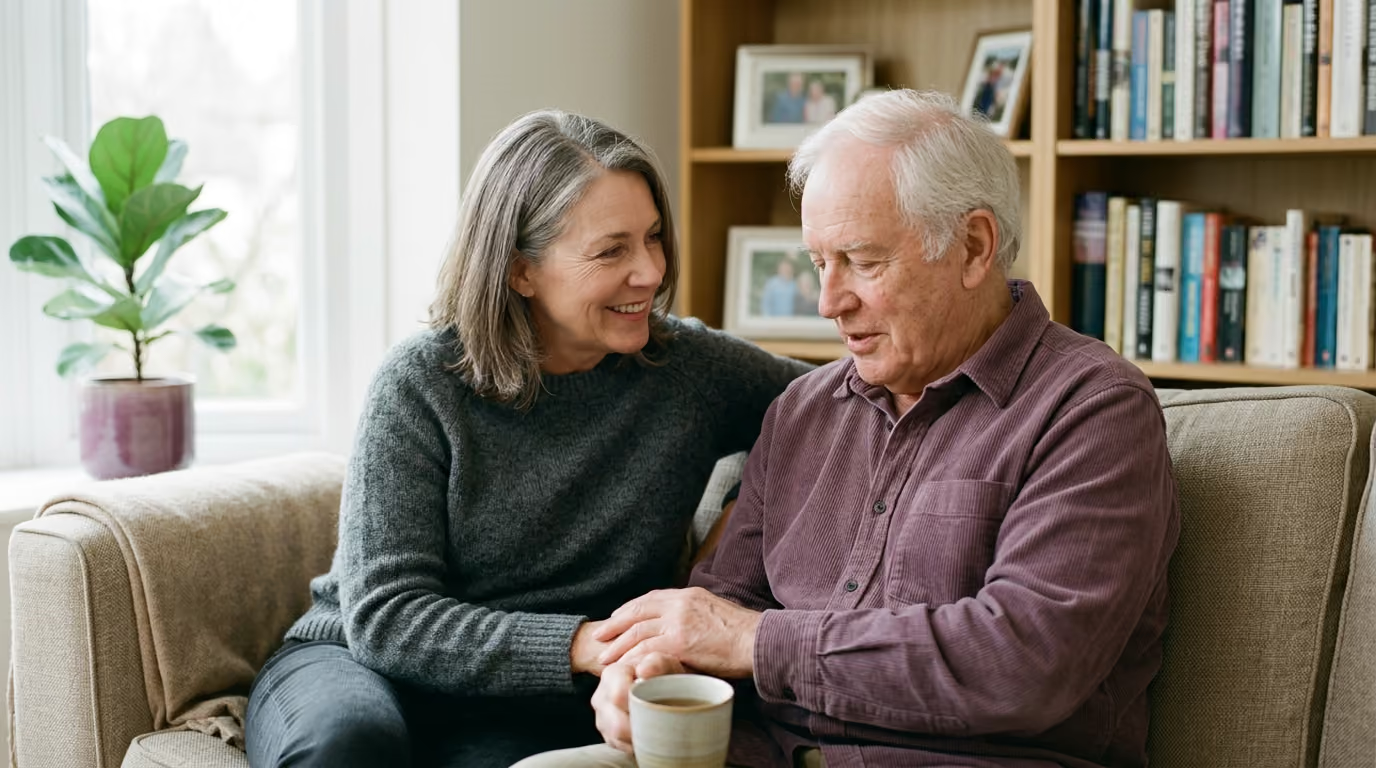

Cultural myths suggest intimacy fades with age, but older adults can sustain vibrant sexual wellbeing by prioritizing comfort, safety, and personal autonomy.





Arthur and Elena sat on their patio on a Sunday morning, sharing coffee in a comfortable silence they had built over thirty-five years. Lately, that silence carried an unspoken question about their private life. Physical changes, shifting energy levels, and a recent blood pressure diagnosis had changed how intimacy felt between them. Neither felt distressed by growing older, yet both wondered what healthy intimacy was supposed to look like in their sixties and beyond.
Sexual wellbeing after 60 is an individualized aspect of general health, emotional connection, and personal quality of life. It does not follow a single mandatory script, schedule, or physical requirement. Instead, it encompasses physical comfort, emotional closeness, solo touch, partnered intimacy, or the deliberate choice to step away from sexual activity entirely. A satisfying intimate life is defined by personal autonomy, mutual respect, safety, and comfort rather than an arbitrary societal target.
Understanding intimacy in later life requires looking at physical health, emotional wellbeing, relationship history, and social context together. Many adults continue to experience desire, pleasure, and deep connection throughout their seventies, eighties, and beyond. Others find satisfaction in emotional companionship, gentle touch, or independent living without active sexuality. By approaching sexual health as a lifelong resource rather than a youthful performance standard, older adults can make informed choices that fit their evolving bodies and unique personal values.
Many cultural messages suggest that sexual activity must center on penetrative intercourse to be valid. Established global health guidance provides a much broader view. The World Health Organization defines sexual health as a state of physical, emotional, mental, and social wellbeing in relation to sexuality. This definition emphasizes that sexual health requires a positive and respectful approach to sexuality and sexual relationships, with opportunities for pleasurable and safe experiences free from coercion, discrimination, and violence.
Sexuality and intimacy are related concepts, but they are not identical. Understanding the difference helps individuals clarify what they want and need:
The National Institute on Aging emphasizes that sexuality and intimacy take varied forms throughout adulthood. A person may value deep companionship without any physical activity, while another may prioritize active sexual expression through solo touch or partnered experiences. Neither choice represents a failure or a medical deficit. Viewing sexual health through this comprehensive lens ensures that no single lifestyle or relationship structure is treated as the universal benchmark.
For many older adults, moving away from rigid performance expectations creates new opportunities for closeness. When the pressure to achieve specific physical benchmarks is removed, partners often report greater comfort and less anxiety. This broader perspective allows people to adapt to natural bodily shifts while preserving pleasure, mutual affection, and personal dignity.
Scientific research demonstrates that interest in intimacy and sexual expression continues across the entire lifespan. Large-scale population studies show that older adults remain sexually active in significant numbers, though individual patterns vary widely. Understanding these findings helps separate common experiences from harmful cultural stereotypes that suggest older adults are universally disinterested in sex.
A landmark study of 3,005 adults aged 57 to 85 published in the New England Journal of Medicine examined sexual behavior in later life. The researchers found that 73 percent of adults aged 57 to 64 reported being sexually active. Among adults aged 65 to 74,
53 percent reported being sexually active, while 26 percent of respondents aged 75 to 85 engaged in sexual activity. Across all age cohorts, a significant number of men and women engaged in vaginal intercourse, oral sex, and masturbation.
Systematic reviews demonstrate substantial variation in reported rates of sexual activity among older populations. A 2024 systematic review noted that estimates of sexual activity among adults aged 60 and older range from 30 percent to 90 percent. Other international reviews report rates ranging from 13 percent to around 90 percent. This wide variance is largely driven by differing study definitions of sexual activity, distinct cultural norms, and varying recruitment methods.
These broad ranges show that there is no standard statistical quota for late-life intimacy. Activity rates tend to decline gradually with age, but this shift reflects changing health circumstances, partner availability, and personal preferences rather than an inevitable loss of interest. Exploring evidence on sexual longevity and aging helps provide perspective on how people maintain vitality and connection over time.
Research also shows that sexual challenges are common among sexually active older adults, but they do not all increase automatically with time. In national survey data, approximately half of sexually active older adults reported at least one sexual difficulty, such as low desire, lubrication challenges, or erection changes. However, most measured difficulties did not rise in direct lockstep with chronological age. The notable exceptions were erectile changes and difficulties reaching orgasm among men, which correlated positively with increasing age.
Furthermore, among older couples who were not sexually active, the most commonly cited reason was a partner's physical health rather than a personal loss of desire. In national surveys, the male partner's physical health was cited as the primary reason for sexual inactivity by 55 percent of men and 64 percent of women. This highlights why sexual wellbeing must be evaluated within a shared relational and health context rather than as an isolated personal trait.
Aging brings physiological changes that can alter how the body responds to sexual stimulation. These bodily changes do not mean that pleasure or closeness must end. Understanding the biology of aging allows individuals to separate predictable shifts from symptoms that warrant medical evaluation.
Following menopause, declining estrogen levels affect the tissues of the vulva, vagina, bladder, and urethra. The American College of Obstetricians and Gynecologists notes that lower estrogen levels can cause vaginal tissues to become thinner, less elastic, and drier. This collection of symptoms, known clinically as the genitourinary syndrome of menopause (GSM), can lead to friction, burning, irritation, and discomfort during sexual activity.
Addressing these symptoms effectively requires distinguishing between different types of supportive products:
Professional guidance from the North American Menopause Society identifies non-hormonal lubricants and moisturizers as first-line options for managing postmenopausal vaginal dryness and discomfort. When these over-the-counter options do not provide adequate relief, healthcare providers may discuss prescription local vaginal estrogen therapies. Readers interested in biological changes can review resources on hormones and sexual wellness to understand how endocrine shifts influence comfort.
For men, physiological changes in later life often involve the vascular and nervous systems. Erections may require more direct physical stimulation to develop, take longer to become fully rigid, or subside more quickly following stimulation. These shifts reflect natural changes in blood flow, connective tissue elasticity, and nerve sensitivity.
The American Urological Association emphasizes that erectile dysfunction is a meaningful clinical marker for underlying cardiovascular health. Because the arteries supplying the pelvic region are smaller than those supplying the heart, vascular changes often appear in erectile tissue first. Persistent changes in erectile rigidity should prompt a comprehensive health review with a physician rather than being dismissed as normal aging.
General vascular health directly influences erectile function. Conditions such as atherosclerosis, hypertension, elevated cholesterol, and diabetes can restrict blood flow throughout the body. Clinicians evaluate cardiovascular stability carefully before considering medical interventions, as certain heart conditions and nitrate medications require strict caution when treating erectile concerns.
Chronic health conditions can alter energy levels, physical comfort, and flexibility. Conditions such as osteoarthritis, spinal stenosis, rheumatoid arthritis, and peripheral neuropathy can make traditional sexual positions painful or physically taxing. Cardiovascular and respiratory conditions, such as heart failure or chronic obstructive pulmonary disease, can cause shortness of breath and fatigue during physical exertion.
Adapting physical intimacy to accommodate chronic conditions allows individuals to maintain closeness without causing pain:
Making these adjustments helps individuals manage their health limitations without sacrificing warmth and physical pleasure. Adapting technique and posture ensures that intimacy remains restorative rather than physically distressing.
Medication use increases significantly in later adulthood. While prescription and over-the-counter drugs manage vital chronic conditions, many common medications carry side effects that influence sexual response, desire, and physical comfort.
The National Institute on Aging notes that various medications can affect sexual desire, arousal, erection, ejaculation, orgasm, and natural vaginal lubrication. When a sudden or noticeable change in sexual function occurs, reviewing current medications provides valuable diagnostic context.
Several major medication categories can influence sexual response:
Patients should never discontinue or adjust the dosage of prescribed medications on their own. Instead, bringing a complete list of all medications, over-the-counter products, and dietary supplements to a primary care appointment allows the clinician to evaluate potential interactions. In many cases, an alternative medication or an adjusted schedule can resolve the sexual side effect while keeping the underlying medical condition well controlled.
Beyond pharmaceuticals, systemic lifestyle factors play a central role in long-term sexual function. Sleep quality, physical activity, balanced nutrition, and moderate alcohol intake all support pelvic circulation, hormone production, and emotional resilience. Learning more about midlife and aging health provides broader context on how everyday habits support systemic wellbeing over time.
Open communication is essential for navigating the physical, hormonal, and emotional shifts that occur in later life. Changes in health or function can trigger unspoken fears of inadequacy, rejection, or burdening a partner. Honest, compassionate dialogue helps couples align their expectations and sustain mutual trust.
Mayo Clinic recommends that older adults broaden their definition of sexual activity to include touching, kissing, caressing, and other intimate contact. Expanding intimacy beyond penetrative intercourse relieves performance pressure and allows both partners to focus on mutual comfort. Couples who discuss their physical needs openly often find that non-penetrative activities provide deep emotional satisfaction and physical pleasure.
Navigating shifts in desire and comfort requires practical communication strategies. The following conversation prompts can help partners discuss sensitive topics without blame:
The goal of these conversations is not to demand a specific outcome, but to create a safe space where both partners can share their feelings honestly. Couples can explore additional frameworks for relationships and intimacy to strengthen their communication skills during periods of transition.
Consider an illustrative model of an older couple, David and Sarah, who had been married for forty years. Following a prostate procedure, David experienced inconsistent erectile function, which caused him to withdraw emotionally. Sarah interpreted his withdrawal as a loss of attraction, while also experiencing discomfort from postmenopausal vaginal dryness.
Instead of avoiding physical contact, they agreed to set aside designated times for shared touch without the expectation of intercourse. They incorporated over-the-counter moisturizers and lubricants to alleviate Sarah's dryness, while David focused on manual touch and sensual massage. By removing the pressure to achieve an erection or engage in intercourse, both partners experienced reduced anxiety, renewed emotional closeness, and satisfying shared pleasure.
This model illustrates how practical adjustments and open communication can resolve intimacy barriers. When partners treat physical changes as shared health realities rather than personal failures, they can discover new ways of connecting that suit their current capabilities. Further guidance is available through articles on couples communication strategies.
Many older adults find themselves dating after a divorce, the death of a spouse, or a long period of living independently. Entering new romantic relationships in later life can bring renewed companionship, excitement, and emotional vitality. However, dating after 60 also requires clear communication about sexual health, personal boundaries, and infection prevention.
A common misconception is that sexually transmitted infections (STIs) only affect young people. Because pregnancy is no longer a concern for postmenopausal women, many older adults mistakenly assume that barrier protection is unnecessary. In reality, biological factors can make older tissues more vulnerable to infection. Thinner, drier postmenopausal vaginal tissue and delicate rectal membranes can tear more easily during physical contact, creating entry points for pathogens.
The National Institute on Aging lists several infections that can affect sexually active older adults, including:
Age does not grant immunity from infection. Public health agencies advise the consistent use of barrier methods, such as latex or polyurethane condoms for vaginal and anal intercourse, as well as dental dams or modified barriers for oral sex. Condoms also reduce physical friction, which can enhance comfort for both partners when paired with adequate water-based or silicone-based lubrication.
Dating safely also involves routine sexual health screening. The Centers for Disease Control and Prevention provides screening recommendations based on specific sexual practices, individual risk factors, and partner history rather than chronological age alone. Older adults entering a new sexual relationship should discuss screening with a healthcare professional and openly share their testing status with prospective partners. Initiating these conversations early establishes mutual respect, builds trust, and ensures that both individuals can engage in intimacy with confidence and peace of mind.
Sexual wellbeing in later life is shaped by individual identity, living arrangements, and cognitive health. Respecting human rights requires that older adults maintain the freedom to express their sexuality safely, free from discrimination and arbitrary institutional barriers.
Older lesbian, gay, bisexual, transgender, and queer (LGBTQ+) adults often navigate unique historical, social, and healthcare dynamics. Many older LGBTQ+ adults lived through eras of severe legal discrimination, social stigma, and pathologization. These past experiences can lead to hesitation when discussing sexual orientation, gender identity, or sexual health concerns with healthcare providers.
Clinical literature highlights significant health disparities and systemic barriers that affect older LGBTQ+ adults. Studies demonstrate that older LGBTQ+ individuals experience rates of sexual activity and common sexual difficulties similar to their heterosexual peers. However, they frequently face challenges finding affirming, culturally competent healthcare providers, particularly in long-term care or assisted living settings. Transgender older adults may also navigate specific physiological considerations related to long-term gender-affirming hormone therapy or prior gender-affirming surgical procedures.
Healthcare providers and senior living communities must adopt inclusive, non-assumptive language. Recognizing diverse family structures, honoring chosen relationships, and providing affirming clinical care are essential steps in protecting the dignity and sexual rights of all older adults.
For individuals residing in assisted living facilities, nursing homes, or memory care settings, maintaining intimacy presents logistical and social hurdles. Institutional environments often lack basic physical privacy, featuring shared rooms, frequent staff interruptions, and rigid daily schedules. Furthermore, staff members and family members may express discomfort or disapproval when residents seek companionship, touch, or sexual expression.
Research on residential care emphasizes the ethical obligation to balance resident autonomy with protection from harm. Facilities should provide clear, respectful policies that support private time for consenting adults, whether they are married couples, newly formed partnerships, or individuals seeking private solo touch. Treating residents with dignity means recognizing that the fundamental human need for connection and touch does not disappear upon entering a care facility.
When an older adult develops dementia, Alzheimer's disease, or other forms of cognitive impairment, evaluating consent requires careful clinical and ethical nuance. A clinical diagnosis of cognitive impairment does not automatically strip an individual of all decision-making capacity. Similarly, the existence of a legal guardianship does not automatically prohibit a person from participating in an affectionate or intimate relationship.
Clinical reviews establish that decision-making capacity is specific to the particular decision at hand, rather than a global, all-or-nothing trait. When evaluating an individual's capacity to consent to an intimate relationship, clinicians and care teams assess several distinct criteria:
Protecting vulnerable individuals from physical, emotional, and financial exploitation is an essential legal and moral duty. However, blanket prohibitions that arbitrarily restrict all affectionate contact can cause profound loneliness and distress. Facilities, clinicians, and families must work collaboratively to assess consent on an individualized, ongoing basis, ensuring that autonomy and safety are carefully balanced.
Many sexual changes in later life can be managed effectively with proper medical guidance and supportive interventions. Knowing when to seek professional input ensures that underlying medical conditions are diagnosed early and that discomfort is addressed promptly.
A consultation with a primary care physician, gynecologist, urologist, or sexual medicine specialist is recommended if you experience any of the following:
Preparing for a healthcare visit can help make the conversation focused and productive. A clinical review suggests that discussing sexual concerns in a private, unhurried setting leads to better clinical outcomes. You can prepare by writing down your specific questions, noting when symptoms started, and bringing a comprehensive list of all current medications, over-the-counter products, and supplements.
The following sample phrases can help you initiate the conversation with your doctor:
Framing the topic around overall health and quality of life helps normalize the discussion. Healthcare providers encounter these concerns daily and can offer tailored strategies that align with your overall medical care. Readers seeking more information can check our health and medical disclaimer and educational resources to prepare for their visit.
Maintaining a fulfilling intimate life after 60 involves small, deliberate actions tailored to your individual preferences and health needs. The following non-clinical steps offer practical ways to foster connection, comfort, and physical ease:
These practical steps are designed to be adaptable. What works well during one season of life may shift during another, and giving yourself permission to adjust your intimate practices ensures that your wellbeing remains steady through life's changes.
Revisit this guide whenever you or your partner experience a major health transition, such as a new medical diagnosis, a change in prescription medications, a surgical procedure, or a shift in mobility. You may also find it helpful when entering a new relationship, moving into a new living environment, or noticing changes in your physical comfort and desire. Returning to these principles provides reassurance and actionable steps as your personal needs evolve.
Sexual wellbeing after 60 is not about meeting an external standard or attempting to recreate the physical patterns of youth. It is about honoring your body, communicating openly with those you care about, and choosing the forms of closeness, pleasure, and autonomy that bring genuine satisfaction to your life today.
Follow Sexential for thoughtful guidance on desire, sexual function, hormones, confidence, relationships and intimacy. Explore new resources and evidence-aware guidance for sexual wellbeing across adulthood.


Explore practical resources on desire, function, hormones, confidence, intimacy and sexual wellbeing.
Read the Blog