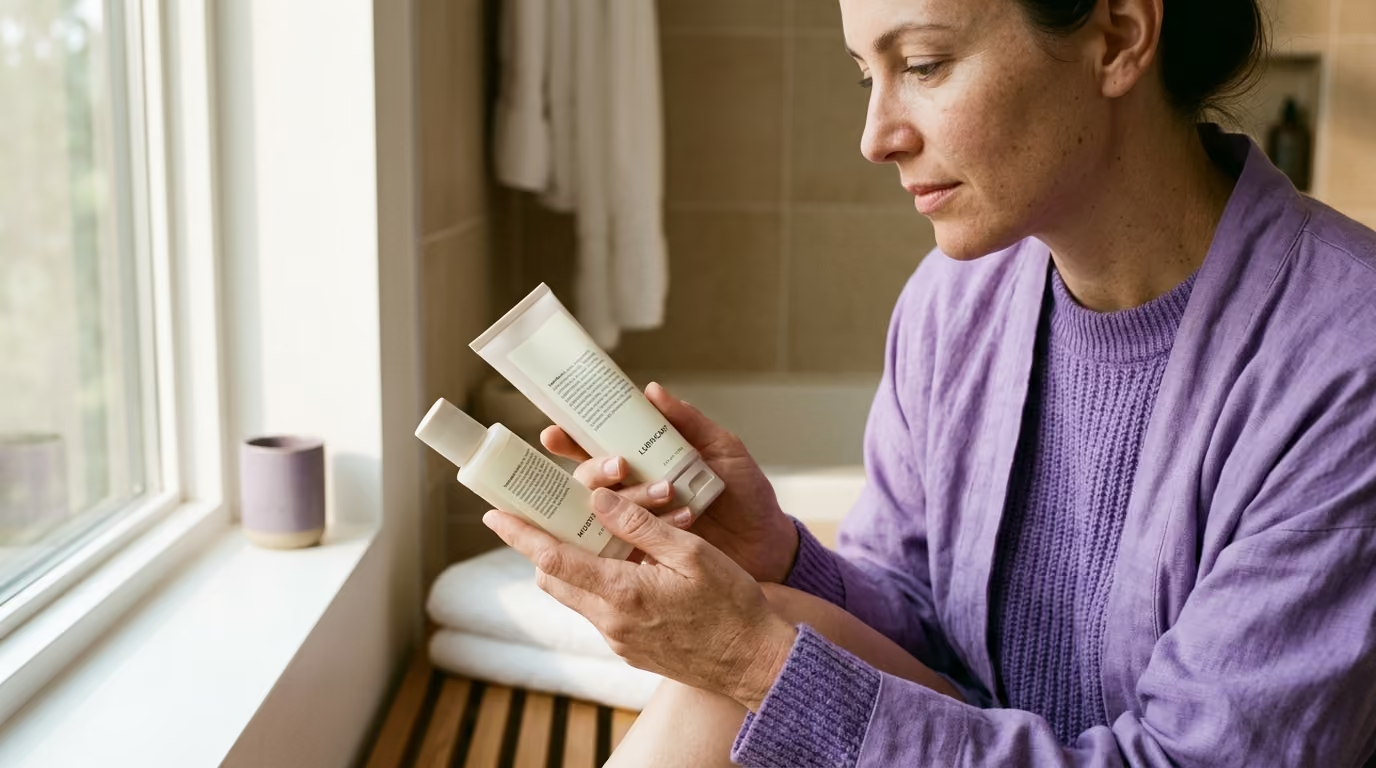

Aging adults experiencing changes in sexual desire can evaluate how fluctuating hormones, overall health, and medical treatments shape intimacy in later life.





Later-life sexuality is a normal, evolving aspect of adult health across the lifespan. It is not an inevitable decline toward zero interest, nor is it a clinical disorder that demands hormone prescriptions for every adult. As the body moves through midlife and into older age, endocrine patterns shift alongside cardiovascular health, nerve function, emotional life, and relationship dynamics. This guide examines how sex hormones interact with physical and psychological factors in later life, clarifying what current research shows, how assessment works, and how to understand changes in intimacy with clarity.
Changes in sexual desire, arousal, physical comfort, and function often occur as adults grow older. These changes do not mean that sexual interest simply vanishes. Endocrine changes, such as decreasing testosterone in men or lower estrogen levels after menopause in women, can influence sexual responses. However, hormones represent only one piece of a complex system. Medical conditions, prescription medications, mood, joint mobility, and relationship communication play equally influential roles in sexual wellbeing.
Hormone therapy is not an automatic solution for every midlife or later-life sexual change. Medical organizations emphasize that low hormone levels must be evaluated alongside clinical symptoms, personal distress, and overall health status. Understanding the difference between natural physiological shifts, treatable medical conditions, and relational adjustments helps adults make thoughtful choices about their sexual health without unnecessary worry.
Sexual expression remains an active part of life for millions of older adults. Broad population studies confirm that aging does not bring an abrupt end to physical intimacy. The National Social Life, Health, and Aging Project (NSHAP), which surveyed more than 3,000 adults aged 57 to 85, revealed that a significant majority of older adults engage in partnered sexual activity. Among participants aged 57 to 64, 84 percent of men and 62 percent of women reported partnered sex within the previous year.
Participation rates gradually decrease in later decades, but intimacy often persists. In the 75 to 85 age bracket of the NSHAP survey, 38 percent of men and 17 percent of women reported sex with a partner during the previous year. The difference between men and women in later age groups often reflects demographic realities. Women tend to live longer and are statistically more likely to outlive their partners, which reduces opportunities for partnered intimacy.
Survey statistics provide helpful social context, but they do not establish a personal standard of normality. An individual who engages in sexual activity once a week, once a month, or not at all can experience high life satisfaction. Sexuality in later life encompasses wide diversity in interest, physical capability, and personal preference.
Researchers also note that sexual difficulties frequently coexist with active sexual lives. In the NSHAP survey, nearly half of sexually active older adults reported at least one bothersome sexual concern. Among active women, 43 percent reported low desire, and 39 percent experienced vaginal dryness. Among active men, 37 percent reported erectile difficulty. These figures demonstrate that having a physical challenge does not automatically end an adult's desire for connection.
To understand these patterns, researchers separate sexual experience into distinct components:
Conflating these distinct elements creates confusion. A person can have intact desire while experiencing physical discomfort. Similarly, an individual might have reliable physical response but low spontaneous interest. Evaluating each element separately allows for more accurate conversations with healthcare professionals.
For broader educational materials on midlife intimate health, readers can review our sexual longevity and midlife aging resources.
In men, the production of androgens changes gradually over several decades. Unlike the relatively rapid transition of female menopause, male hormone changes occur as a slow, continuous process. Starting around the late thirties or early forties, serum testosterone levels in men decline by approximately one percent per year. This gradual shift is a standard physiological process rather than an acute medical event.
The Endocrine Society defines clinical hypogonadism as a specific medical condition. It requires both characteristic clinical signs and symptoms along with consistently low, accurately measured morning testosterone levels. Age-related decline in testosterone does not mean every older man has hypogonadism. Many men maintain hormone concentrations within normal physiological ranges well into their seventies and eighties without needing clinical intervention.
Understanding male hormone biology requires looking at how testosterone moves through the bloodstream:
Because SHBG levels increase with age, the amount of free, biologically active testosterone may decrease even when total testosterone appears stable. When evaluating symptoms, clinicians often measure total testosterone first and calculate free testosterone if the total value is borderline.
The symptoms of androgen deficiency can be subtle and overlap with many common signs of aging. Low daily energy, reduced muscle mass, increased body fat, mild changes in mood, and reduced sexual thoughts can stem from sleep disorders, chronic stress, metabolic illness, or low testosterone. Because these symptoms have diverse origins, guidelines caution clinicians against attributing all non-specific midlife changes to hormones alone.
Older adults interested in male reproductive biology can review our men's sexual health education materials for structured guidance on healthy living.
A common misconception is that testosterone levels govern every aspect of male sexual performance. Clinical research shows that testosterone primarily influences sexual desire and the frequency of sexual thoughts, rather than the mechanical ability to achieve an erection. When middle-aged or older men experience erectile dysfunction (ED), vascular and neurological mechanisms are far more often
the primary contributors.
A landmark clinical trial evaluated middle-aged and older men with confirmed hypogonadism and low libido. When these men received testosterone therapy, they showed significant improvements in sexual desire and frequency of sexual activity over a two-year period. However, their erectile function scores did not show meaningful improvement. The larger TRAVERSE clinical trial, which enrolled over 5,000 men with cardiovascular risk and low testosterone, found similar results: testosterone improved desire and activity frequency, but did not resolve erectile difficulties.
These clinical findings underscore that erectile function depends primarily on blood flow and nerve signals:
The Merck Manual emphasizes that vascular and neurological disorders account for the vast majority of organic erectile dysfunction cases. While low testosterone can diminish the mental motivation to initiate sex, it rarely causes isolated mechanical failure in men with healthy blood flow. Therefore, testing testosterone is an important part of a broad medical assessment, but hormone replacement should not be viewed as a standalone treatment for erectile problems.
When clinicians assess erectile function, they investigate cardiovascular risks, blood glucose regulation, prescription side effects, and pelvic floor tone. Treating underlying vascular disease or using targeted therapies that enhance local blood flow typically yields better functional outcomes than hormone therapy alone.
The female endocrine transition during perimenopause and menopause involves substantial shifts in ovarian hormone production. As ovulation becomes irregular and eventually ceases, circulating levels of estradiol drop significantly. While the adrenal glands and ovaries continue to produce small amounts of androgens, the overall hormonal environment changes. These biological adjustments can influence sexual response in several distinct ways.
The physical impact of reduced estrogen on pelvic tissues is clinically termed the Genitourinary Syndrome of Menopause (GSM). Because estrogen maintains the thickness, elasticity, and moisture of vulvovaginal tissues, lower hormone levels lead to physiological thinning and reduced natural lubrication.
Common physical characteristics of GSM include:
These physical symptoms can turn sexual activity from a pleasurable experience into a source of pain or discomfort. When intercourse causes burning or friction, women may naturally develop an aversion to touch, leading to secondary reductions in sexual desire. A woman whose body anticipates discomfort will experience higher sympathetic nervous system arousal, which further suppresses physical arousal and natural lubrication.
Educational guides on feminine physiological changes are available through our women's sexual wellbeing resource section.
Addressing discomfort caused by GSM involves a stepwise clinical approach. The North American Menopause Society (NAMS) and the American College of Obstetricians and Gynecologists (ACOG) recommend starting with accessible, non-hormonal products before moving to prescription therapies.
Over-the-counter options provide mechanical comfort without altering systemic or local hormone levels:
When over-the-counter moisturizers and lubricants do not adequately resolve pain, medical guidelines recommend targeted prescription therapies. ACOG identifies low-dose local vaginal estrogen as the preferred hormonal treatment for sexual dysfunction resulting from GSM.
Prescription options for GSM include:
Systemic menopausal hormone therapy (MHT), which treats whole-body symptoms like severe hot flashes and night sweats, also supports vaginal tissues. However, for women whose only bothersome symptom is localized genital discomfort or painful intercourse, local low-dose therapies are the standard clinical recommendation due to their favorable safety profile.
In women, androgens such as testosterone and DHEA are produced naturally by both the ovaries and the adrenal glands. Circulating androgens decline gradually across adulthood, starting in the early reproductive years and continuing through midlife. Unlike estrogen, which drops sharply at menopause, female testosterone levels do not experience an abrupt cliff during the menopausal transition.
Research has investigated whether low androgen levels directly cause low libido in women. The Global Consensus Position Statement on the Use of Testosterone Therapy for Women examined extensive clinical evidence and established clear boundaries for care. The consensus concluded that blood testosterone levels do not reliably correlate with a woman's subjective sexual desire or satisfaction. A woman with low laboratory testosterone may have a robust, fulfilling sex life, while a woman with high levels may experience low interest.
Consequently, the consensus statement identifies only one evidence-based indication for testosterone therapy in women: postmenopausal women who have received a formal, comprehensive diagnosis of Hypoactive Sexual Desire Disorder (HSDD).
Diagnosing HSDD requires meeting strict clinical criteria:
Clinical trials show that for postmenopausal women diagnosed with HSDD, physiological doses of testosterone produce a moderate, statistically significant improvement in satisfying sexual events and sexual interest. Medical guidelines caution that testosterone is not a general remedy for low energy, fatigue, or mood changes in women. Dosing must match physiological female ranges to avoid unwanted androgenic side effects such as acne, excessive facial hair growth, or vocal deepening.
Readers seeking deeper analysis of desire regulation can explore our desire and arousal resources.
Sexual response in later life reflects the combined state of biological, emotional, and social health. Focusing exclusively on hormones ignores many common factors that influence desire and physical function. The National Institute on Aging (NIA) notes that chronic medical illnesses, prescription drugs, and psychological stress often exert a stronger impact on intimate life than hormone levels alone.
The table below summarizes common physical and systemic factors that can alter sexual experiences in later life:
Prescription medications represent another frequent and reversible influence on sexual response. Because older adults are more likely to take multiple maintenance medications, side effects can compound over time.
Medication categories that may alter sexual function include:
Patients should never discontinue prescribed maintenance medications without consulting their prescribing clinician. When a medication interferes with sexual wellbeing, clinicians can often adjust dosages, switch to alternative pharmaceutical classes, or time doses to minimize intimate side effects.
Emotional and psychological factors also hold major significance. Chronic stress, grief, unresolved body image concerns, anxiety about aging, and mild depression all dampen the brain's sexual excitement pathways. An individual navigating high life stress will often experience lower spontaneous desire, regardless of their hormone levels.
To learn more about the interplay between physiology and daily habits, visit our lifestyle and sexual wellbeing library.
When an adult notices persistent changes in sexual desire, comfort, or function, a structured assessment ensures that medical concerns are evaluated methodically. The assessment should focus on what the individual finds personally bothersome and what goals they hope to achieve.
A comprehensive evaluation follows several sequential steps:
The initial conversation should clarify the specific nature of the problem. Is the central issue a lack of physical comfort, difficulty with erections, delayed orgasm, fatigue, or low interest in intimacy? Distinguishing between physical barriers and motivational changes helps clinicians select the correct diagnostic path.
A clinician will review all current prescriptions, over-the-counter supplements, and chronic health conditions. Assessing cardiovascular health, blood pressure, glycemic control, and sleep quality often reveals non-hormonal contributors that can be managed safely.
When a man displays symptoms consistent with testosterone deficiency, the Endocrine Society recommends strict diagnostic protocols:
For men over 65, the Endocrine Society recommends an individualized discussion regarding potential benefits and risks before starting therapy. Treatment is appropriate only when unequivocal, repeated low morning testosterone aligns with clear symptoms.
For women experiencing later-life sexual changes, laboratory blood testing plays a different role:
Hormone therapies provide meaningful clinical benefits for appropriately selected individuals, but they carry potential risks that require careful monitoring. Clear communication about what hormones can and cannot achieve helps adults set realistic expectations.
In older men receiving testosterone replacement therapy, safety considerations focus heavily on cardiovascular health, blood composition, and prostate surveillance. The TRAVERSE trial evaluated 5,246 men aged 45 to 80 with pre-existing cardiovascular disease or elevated risk. Over an average follow-up of 22 months, major adverse cardiovascular events occurred at similar rates in both groups: 7.0 percent in the testosterone group and 7.3 percent in the placebo group.
However, the study observed higher rates of secondary complications in the testosterone group:
Testosterone therapy is generally avoided in men with uncontrolled heart failure, recent cardiovascular events, untreated severe sleep apnea, or active prostate cancer. Ongoing medical supervision with regular blood counts and prostate-specific antigen (PSA) checks is essential throughout treatment.
For women considering systemic menopausal hormone therapy for vasomotor symptoms, NAMS guidelines indicate that the benefit-to-risk ratio is most favorable for women who begin treatment within 10 years of menopause onset or before age 60. For local vaginal estrogen used to treat GSM, systemic absorption is exceptionally low, making it safe for long-term use in the majority of women.
Testosterone therapy in women is limited to physiological doses that mimic normal premenopausal female concentrations. Higher doses can cause androgenic side effects, such as irreversible voice deepening, clitoral enlargement, hair loss, or unwanted facial hair growth. Long-term safety data for female testosterone use beyond two years remain limited, reinforcing the need for ongoing clinical oversight.
For comprehensive information about hormone balance and wellness options, browse our hormones and sexual wellness resources.
Changes in physical function or hormone levels do not happen in emotional isolation. In partnered relationships, physical changes in one person inevitably influence the dynamic between both partners. Open communication, mutual empathy, and thoughtful adjustments allow couples to maintain rewarding intimacy across changing life stages.
When an adult experiences a drop in desire or physical response, their partner may misinterpret the change as a loss of attraction, affection, or commitment. A man struggling with erections may withdraw emotionally to avoid embarrassment. Similarly, a woman experiencing pain from vaginal dryness might avoid physical touch entirely to prevent unwanted sexual expectations.
Couples can navigate these transitions using several low-risk, practical strategies:
Consent and mutual comfort remain fundamental. As physical capabilities shift, previous sexual routines may need adjustments. Checking in with each other about what feels comfortable ensures that both partners feel respected and supported.
Couples looking to strengthen mutual communication can read our relationships and intimacy guides for structured conversation tools.
No. A gradual decline in testosterone is a normal part of aging, but it rarely eliminates desire on its own. Many men with lower testosterone maintain an active interest in intimacy. Emotional connection, visual stimulation, partner attraction, and overall mental health contribute substantially to sexual desire alongside hormone levels.
Menopause marks the end of reproductive fertility, not the end of sexuality. While hormonal shifts can cause physical changes like tissue dryness, these issues can be managed effectively with moisturizers, lubricants, or local therapies. Many women report continued or even increased sexual satisfaction in postmenopausal years due to freedom from pregnancy concerns and greater self-knowledge.
Most non-prescription supplements marketed to boost hormones lack rigorous scientific evidence for efficacy and safety. Some contain unlisted ingredients or inconsistent doses that can interact negatively with prescription medications. Evidence-based hormone adjustments require accurate medical diagnosis, standardized pharmaceutical formulations, and regular clinical monitoring.
A medical consultation is appropriate whenever a sexual change is persistent, causes personal distress, creates relationship conflict, or is accompanied by physical pain. Sudden changes in function can also serve as early warning signs of cardiovascular, metabolic, or neurological conditions, making early clinical assessment beneficial for overall health.
Follow Sexential for thoughtful guidance on desire, sexual function, hormones, confidence, relationships and intimacy. Explore new resources and evidence-aware guidance for sexual wellbeing across adulthood.


Explore practical resources on desire, function, hormones, confidence, intimacy and sexual wellbeing.
Read the Blog