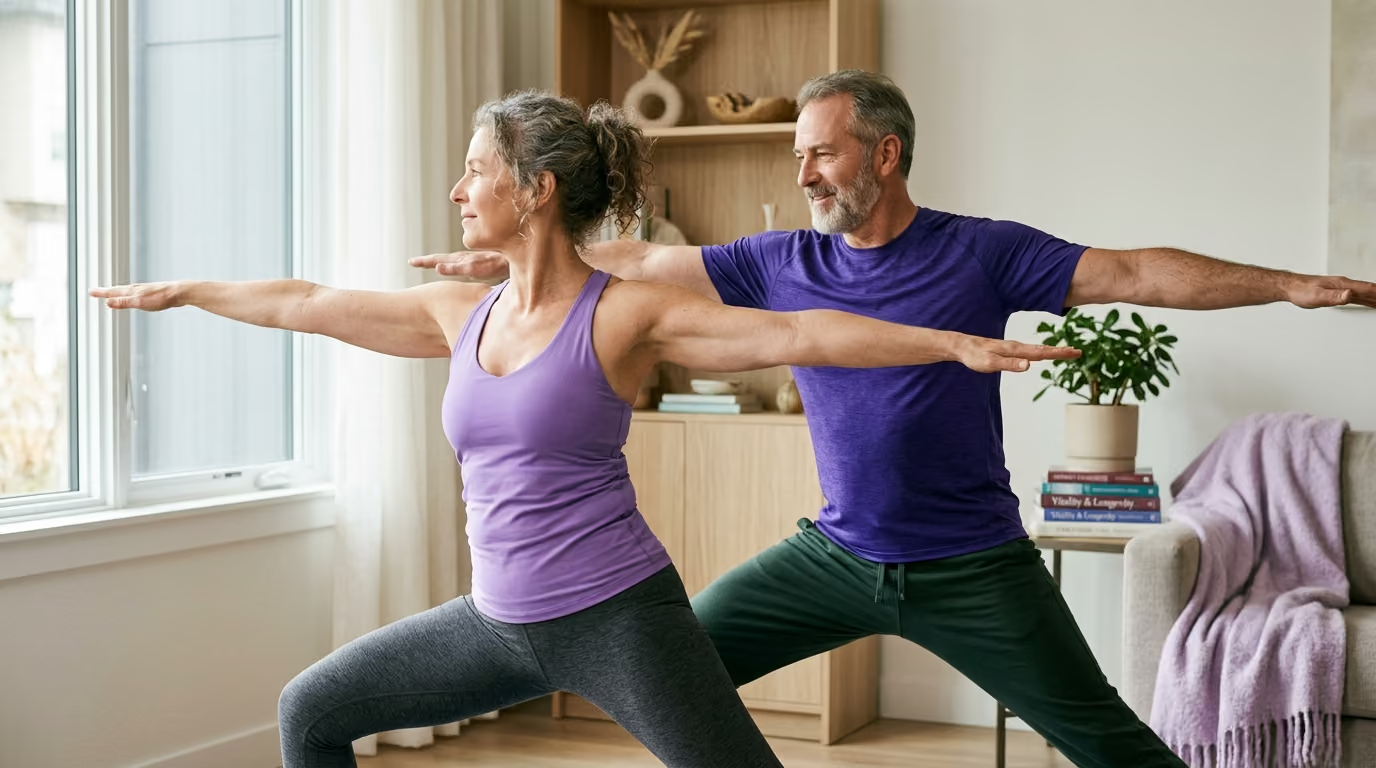

Regular physical activity supports midlife sexual function, cardiovascular health, and pelvic floor wellness to promote safe intimacy and long-term vitality.





Many adults search online asking if regular exercise can restore their sex life or reverse midlife changes in sexual function. The straightforward answer is that physical activity supports general health and can improve certain aspects of sexual function, but it is not a standalone cure for every sexual difficulty.
Research shows that regular aerobic exercise can improve erectile function scores in men and support overall stamina, circulation, and mood across midlife and older adulthood. However, exercise cannot resolve all hormonal shifts, structural changes, relationship distress, or medical side effects. Understanding what movement can and cannot do allows you to build a sustainable routine that supports your wellbeing without unrealistic expectations.
Physical activity influences sexual wellbeing through several interconnected biological and psychological pathways. At the most fundamental level, sexual arousal and function depend on healthy blood circulation, neurological signaling, and hormonal balance. When you engage in regular movement, you support endothelial function, which is the ability of your blood vessels to dilate and deliver blood efficiently throughout your body. This vascular responsiveness is essential for both penile erection in men and clitoral engorgement, pelvic vasocongestion, and natural lubrication in women.
Beyond circulation, physical conditioning directly affects stamina, joint mobility, and muscular endurance. These physical capabilities make intimacy more physically comfortable and less fatiguing as the body ages. Exercise also stimulates the release of neurotransmitters like dopamine and endorphins, which can improve baseline mood, reduce stress, and reduce fatigue. Lower systemic stress often reduces the sympathetic nervous system activity that can otherwise inhibit sexual arousal.
However, it is vital to avoid overstating what exercise can achieve. Physical activity does not replace medical therapies for severe physiological conditions, nor does it instantly restore depleted hormone levels. If you are researching sexual longevity across midlife, movement should be viewed as a foundational lifestyle pillar rather than an isolated clinical intervention. It works best in combination with comprehensive medical care, open partner communication, and realistic expectations.
Individual responses to exercise vary widely based on baseline fitness, overall health status, and underlying medical conditions. A person navigating joint pain or metabolic disease will experience different outcomes than someone who is already physically active. Recognizing these distinctions prevents unnecessary frustration and helps you tailor your approach to your unique body.
Erectile function relies heavily on a healthy cardiovascular system. Because the penile arteries are smaller than coronary and carotid vessels, changes in vascular health often appear in sexual function before they manifest elsewhere in the body. When blood vessels lose elasticity or develop plaque, blood flow diminishes, leading to difficulties achieving or sustaining an erection.
Clinical research provides measurable evidence regarding aerobic exercise and erectile performance. A 2023 systematic review and meta-analysis evaluated 11 randomized controlled trials that assessed aerobic exercise using the International Index of Erectile Function. Across these trials, aerobic exercise was associated with a statistically significant mean improvement of 2.8 points on the erectile function domain. The data showed moderate heterogeneity across the studies, reflecting differences in exercise protocols and participant populations.
Interestingly, the meta-analysis revealed that participants with greater baseline difficulty experienced larger improvements. Men with mild erectile difficulty saw an average improvement of 2.3 points, while those with moderate difficulty gained 3.3 points. Participants with severe erectile difficulty experienced a mean improvement of 4.9 points. These findings suggest that individuals with more pronounced vascular impairment may experience greater relative benefits from improving cardiovascular fitness.
Other intervention studies suggest that structured exercise totaling roughly 160 minutes per week over six months can reduce erectile problems. This benefit is particularly evident when erectile difficulties are associated with physical inactivity, obesity, hypertension, or metabolic syndrome. Nevertheless, these numbers represent statistical averages across groups rather than a guarantee for any single person. While aerobic conditioning supports vascular responsiveness, it does not cure erectile dysfunction caused by severe nerve damage, pelvic trauma, or advanced hormonal deficiencies. You can read more about these distinct factors in our collection of men's sexual wellness considerations.
The relationship between physical activity and female sexual function involves a distinct set of physiological mechanisms. During perimenopause and postmenopause, declining estrogen levels often lead to changes in vaginal tissue elasticity, reduced baseline blood flow, and diminished natural lubrication. Many women wonder whether regular physical workouts can counteract these age-related shifts.
The current scientific evidence regarding exercise and menopausal sexual function remains promising but limited. A systematic review examined 11 prospective studies, including eight randomized controlled trials, investigating physical exercise and sexual wellbeing in peri- and postmenopausal women. The researchers concluded that while exercise programs showed positive trends, high-quality evidence supporting general exercise as a direct treatment for menopausal sexual dysfunction remains sparse. Among the exercise styles evaluated, targeted pelvic floor routines appeared to have the most measurable impact.
General physical activity supports postmenopausal wellbeing by enhancing sleep quality, supporting metabolic health, and improving bone density. It also helps sustain energy and body confidence, which indirectly support sexual desire and satisfaction. However, general cardiovascular exercise cannot replenish localized tissue estrogen. When reduced estrogen causes vaginal dryness, thinning of the vaginal lining, or pain during penetration, systemic aerobic workouts will not resolve the tissue changes.
Organizations such as the American College of Obstetricians and Gynecologists emphasize that localized discomfort typically requires targeted medical solutions. These may include vaginal moisturizers, lubricants, or prescribed local estrogen therapies. Physical movement remains a valuable component of healthy aging, but it should not be treated as a substitute for appropriate medical care. Readers seeking more context can review our resources on women's sexual wellness through menopause.
The pelvic floor consists of a hammock of muscles supporting the bladder, bowel, and reproductive organs. These muscles play a critical role in sexual sensation, voluntary muscular contractions during orgasm, and structural support. As adults age, pelvic floor health often becomes a focal point of sexual wellness discussions.
Pelvic floor muscle training involves targeted contraction and release exercises designed to improve muscle tone, endurance, and coordination. Systematic reviews show that structured pelvic floor training can improve at least one sexual function variable in women experiencing pelvic floor weakness or urinary incontinence. In fact, a systematic review and meta-analysis indicated that 10 out of 14 interventional studies reported significant positive effects on female sexual function. However, researchers continuously urge caution and emphasize the need for larger, high-quality trials specifically designed around sexual outcomes.
A common misconception is that everyone should perform repetitive pelvic floor contractions, commonly known as Kegel exercises. In reality, pelvic floor muscles can be underactive and weak, or overactive and excessively tight. An overactive or hypertonic pelvic floor cannot relax properly, which can lead to chronic pelvic pain, painful penetration, and reduced sexual pleasure. For individuals experiencing conditions like dyspareunia or vulvodynia, adding more tightening exercises can worsen discomfort rather than relieve it.
When pelvic pain or tension is present, specialized pelvic floor physical therapy focusing on down-training and muscle lengthening is far more appropriate. A specialized physical therapist can evaluate whether your pelvic muscles need strengthening, coordination training, or manual release. Blanket recommendations to contract the pelvic floor should be avoided, particularly when pain or tightness accompanies sexual activity.
Establishing a safe, sustainable exercise routine requires following established public health benchmarks rather than intense, short-term workout trends. The World Health Organization provides comprehensive physical activity guidelines specifically tailored to older adults and individuals navigating midlife transitions. These recommendations focus on functional longevity, cardiovascular resilience, and injury prevention.
The World Health Organization recommends that adults engage in 150 to 300 minutes of moderate-intensity aerobic physical activity throughout the week. Alternatively, adults can complete 75 to 150 minutes of vigorous-intensity aerobic activity, or an equivalent combination of both. Moderate-intensity activities include brisk walking, recreational cycling, water aerobics, or active gardening. Vigorous activities involve running, fast swimming, or challenging group fitness classes.
In addition to aerobic conditioning, the guidelines outline two other essential movement categories:
The multicomponent training recommendation is especially valuable for older adults because it improves functional balance and neuromuscular control. Research cited by the World Health Organization shows that multicomponent activity can reduce the rate of falls among older individuals by as much as 23 percent. While fall prevention is primarily a mobility benefit, maintaining physical stability and joint confidence directly supports intimacy by keeping movement comfortable and safe.
A core principle of public health guidance is that doing some physical activity is always better than doing none. If you currently lead a sedentary lifestyle, attempting to meet the full 300-minute target immediately can cause overuse injuries or burnout. Starting with 10-minute daily walks and progressively adding time is an effective, evidence-based way to build lasting physical conditioning.
Erectile dysfunction is often viewed solely as a frustrating bedroom issue, but medical organizations recognize it as an important systemic health marker. Because the vascular network is continuous throughout the human body, problems that impair blood flow to the pelvic region often reflect broader arterial changes.
The European Association of Urology guidelines recommend that clinicians perform cardiovascular risk assessments in men evaluated for vasculogenic erectile dysfunction. This process often includes calculating an atherosclerotic cardiovascular disease risk score to determine the likelihood of future vascular events. Similarly, the American College of Cardiology classifies erectile dysfunction as an independent cardiovascular risk marker and a risk-enhancing factor. When blood vessels struggle to dilate adequately during sexual stimulation, it may indicate early endothelial dysfunction or arterial stiffening elsewhere.
Recognizing this connection shifts the focus from simple symptom management to proactive health protection. If you notice a persistent change in erectile quality, increasing your weekly exercise volume is a positive step, but it should not replace a thorough medical checkup. A physician can assess blood pressure, cholesterol levels, blood glucose, and other vital markers to ensure your cardiovascular system is properly supported.
Treating erectile health as a vital sign removes unnecessary shame and connects sexual wellbeing to overall longevity. When you manage blood sugar, reduce systemic inflammation, and support heart health through appropriate lifestyle habits and medical care, sexual function often benefits as a natural consequence.
Physical intimacy naturally increases heart rate, systolic blood pressure, and oxygen consumption. For individuals with diagnosed cardiovascular disease or those recovering from cardiac events, wondering whether sex is safe is a common and reasonable concern. Authoritative cardiology organizations have developed clear clinical guidance to help individuals navigate intimacy safely.
The American Heart Association states that sexual activity is generally reasonable for individuals with cardiovascular disease who are determined to be at low risk of complications following a clinical evaluation. For individuals whose risk is unclear or who have intermediate risk, clinical exercise stress testing can be used to evaluate exercise capacity and detect potential symptoms. According to these guidelines, sexual activity is generally considered reasonable for patients who can achieve 3 to 5 metabolic equivalents of task during stress testing without experiencing angina, excessive breathlessness, ischemic changes, or arrhythmias.
For practical comparison, performing physical activity at 3 to 5 metabolic equivalents is roughly comparable to walking briskly at 3 to 4 miles per hour on a flat surface or climbing two flights of stairs at a steady pace. If you can perform these everyday physical tasks comfortably without chest pain, lightheadedness, or extreme shortness of breath, the cardiovascular demands of sexual activity are generally well tolerated.
However, clinical guidance emphasizes that individuals with unstable, decompensated, or severe symptomatic heart disease must defer sexual activity until their condition is medically stabilized. If you experience exertional chest pain, sudden palpitations, or extreme fatigue during physical activity or sex, you must consult your cardiologist. You should always review our health and medical guidance and speak directly with your physician rather than relying on self-assessment tools.
Physical activity affects sexual wellbeing through psychological and relational channels as well as biological ones. Engaging in regular movement frequently improves body awareness, physical confidence, and self-esteem. When individuals feel capable and comfortable within their bodies, they often experience greater ease and presence during intimate moments.
Physical changes associated with midlife, such as shifts in body composition, joint stiffness, or slower physical recovery, can sometimes trigger performance anxiety. When anxiety enters the bedroom, the body enters a mild stress response, releasing adrenaline and constricting peripheral blood vessels. This psychological stress can directly interfere with erection, lubrication, and orgasmic release. Exercise helps regulate the nervous system, reducing chronic anxiety and making it easier to shift into a relaxed state.
Physical conditioning also allows couples to adapt their intimate lives as their bodies change over time. When partners experience joint pain or reduced flexibility, modifying positions and pacing can make intimacy significantly more comfortable. Sustaining a fulfilling intimate life rarely requires intense athletic performance; rather, it thrives on mutual comfort, creativity, and emotional safety.
Maintaining open communication with a partner is vital when navigating midlife physical changes. Talking openly about physical comfort, preferred pacing, and any changes in physical response prevents misunderstandings and reduces pressure. Intimacy involves far more than physical intercourse; emotional closeness, non-demand touch, and shared affection are equally valuable components of long-term sexual satisfaction.
Integrating physical activity into your routine does not require extreme training regimens or drastic lifestyle overhauls. Sustainable, moderate movement practiced consistently over months and years provides the greatest benefits for physical health, cardiovascular function, and sexual longevity.
The most effective movement program is one you can maintain safely without causing excessive joint strain or exhaustion. By focusing on a balance of aerobic conditioning, strength maintenance, and flexibility, you support your body across every decade of adulthood.
Use the following practical checklist to evaluate and refine your physical activity routine this week:
Physical activity serves as a powerful foundation for overall vitality and healthy aging. When combined with accurate health information, appropriate medical care, and clear communication, regular movement supports a confident, fulfilling, and comfortable intimate life throughout adulthood.
Follow Sexential for thoughtful guidance on desire, sexual function, hormones, confidence, relationships and intimacy. Explore new resources and evidence-aware guidance for sexual wellbeing across adulthood.


Explore practical resources on desire, function, hormones, confidence, intimacy and sexual wellbeing.
Read the Blog