
Menopausal sexual symptoms often seem inevitable, but targeted local hormones, nonhormonal moisturizers, and desire therapies provide effective relief for diverse health profiles.





Menopausal sexual symptoms are physical, hormonal, and psychological changes that affect sexual comfort, arousal, and satisfaction during and after the menopause transition. They are not a single uniform disorder, nor do they reflect an inevitable end to a satisfying sex life. Instead, these symptoms represent distinct challenges that range from localized tissue thinning to broader shifts in desire.
Selecting an effective approach begins by matching specific symptoms to the right category of care. Nonhormonal options, such as moisturizers, lubricants, and pelvic floor physical therapy, provide targeted relief for tissue friction and muscular tension without altering hormone levels. Local hormonal therapies, including low-dose vaginal estrogens and vaginal dehydroepiandrosterone (DHEA), restore vaginal tissue integrity with minimal systemic absorption. Oral options like ospemifene address tissue changes systematically, while systemic hormone therapy treats vaginal symptoms alongside broader issues like hot flashes. For persistent, distressing reductions in sexual desire, specific centrally acting medications or carefully monitored testosterone may be evaluated.
No single treatment resolves every menopausal sexual concern. Finding the right path requires understanding how each option works, reviewing the clinical evidence, assessing personal medical histories, and collaborating with a healthcare provider. This comprehensive guide compares nonhormonal, local hormonal, systemic, and behavioral approaches to help you make informed decisions about your sexual wellbeing.
Understanding menopausal sexual changes requires separating localized physical symptoms from shifts in sexual interest. The term Genitourinary Syndrome of Menopause, commonly referred to as GSM, describes a collection of symptoms and signs associated with declining estrogen and other sex steroid levels. These changes affect the vulva, vagina, urethra, and bladder.
Symptoms of GSM can include vulvovaginal dryness, burning sensations, irritation, reduced natural lubrication, and pain during sexual activity. Urinary changes are also common, such as painful urination, urinary urgency, increased urinary frequency, and recurrent urinary tract infections. Clinical prevalence estimates for GSM vary widely across published research. Guidelines from the American Urological Association, the Society of Urodynamics, Female Pelvic Medicine and Urogenital Reconstruction, and the American Urogynecologic Society note prevalence rates ranging from 13 percent to 87 percent in postmenopausal populations. Other clinical reviews report ranges between 14 percent and 87 percent. This wide range reflects differences in study populations, diagnostic criteria, and whether individuals actively report their symptoms.
GSM does not require a specific number of symptoms for a formal diagnosis. Expert consensus panels emphasize that clinicians should focus on the specific symptoms that bother the individual, rather than requiring a rigid checklist of physical findings. Some individuals experience marked tissue changes with minimal discomfort. Others have severe pain or urinary urgency despite modest visible changes during an examination.
It is equally important to distinguish physical discomfort from low sexual desire. Pain during intimacy, known clinically as dyspareunia, frequently causes an individual to avoid sexual contact. Anticipating pain naturally reduces arousal and pleasure. However, low desire can also occur independently of physical pain.
Hypoactive Sexual Desire Disorder, or HSDD, is defined as a persistent or recurrent deficiency of sexual thoughts, fantasies, or desire that causes marked personal distress or interpersonal difficulty. Professional guidelines from the International Society for the Study of Women's Sexual Health emphasize that HSDD requires a biopsychosocial assessment. This evaluation looks at hormonal status, physical health, psychological wellbeing, medication side effects, and relationship dynamics. A lack of desire that stems primarily from severe relationship distress or an unrelated medical illness does not meet the diagnostic criteria for HSDD. Treating pain will not always restore desire, and treating desire will not resolve tissue thinning.
Nonhormonal therapies serve as an accessible starting point for managing menopause-related sexual discomfort. These interventions focus on hydrating delicate tissues, reducing mechanical friction during intimacy, and relaxing tight pelvic floor muscles. They do not alter circulating hormone levels, making them suitable for individuals seeking simple relief or those who cannot use hormone therapies.
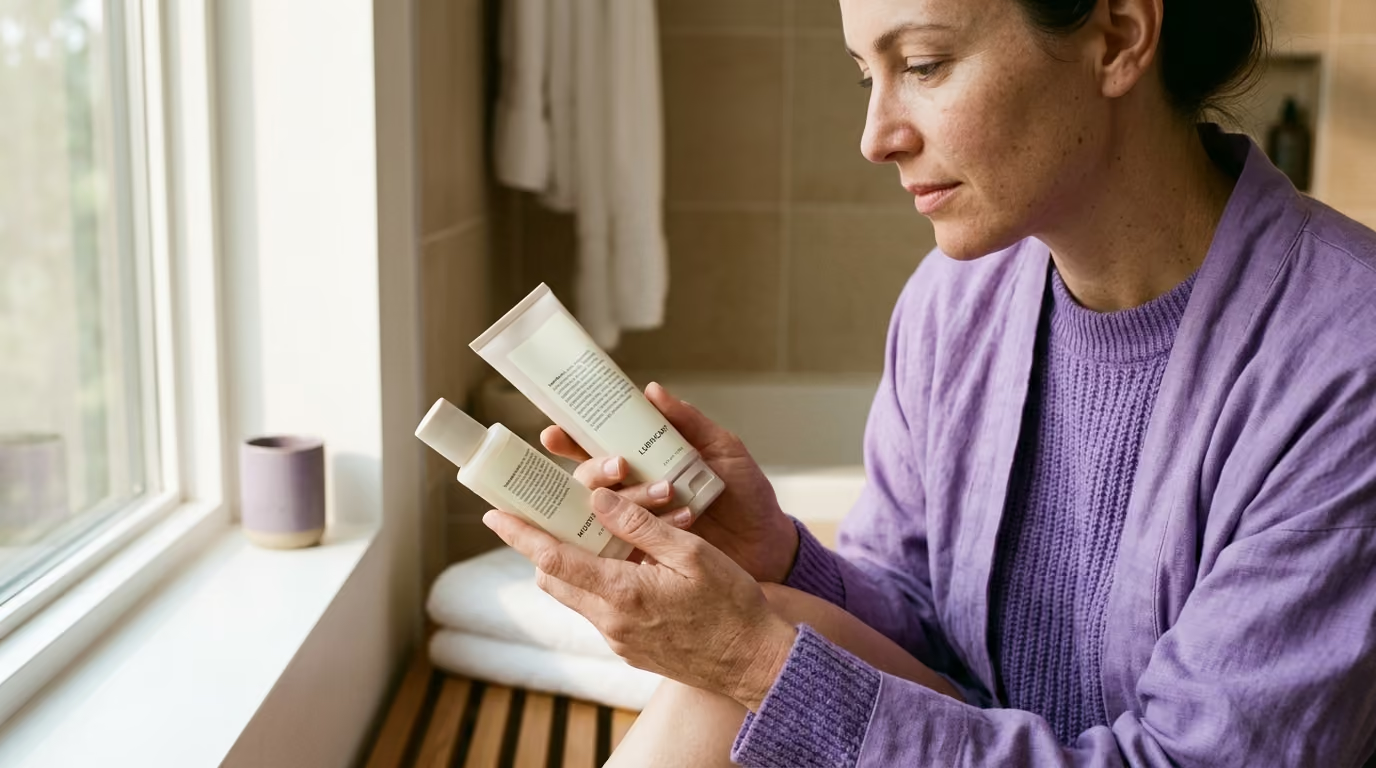
Vaginal lubricants are designed for short-term use during sexual activity. Their primary purpose is to reduce friction, protect delicate epithelium, and make penetration or touch more comfortable.
Lubricants are available in water-based, silicone-based, and oil-based formulations:
Lubricants should be applied directly to the vaginal opening, inner tissues, and any partner or device before and during activity.
Vaginal moisturizers serve a different clinical purpose than lubricants. They are formulated for regular, ongoing application to improve baseline tissue hydration, elasticity, and comfort.
Moisturizers contain water-binding polymers that adhere to the vaginal wall, slowly releasing moisture over several days. They are typically applied two to three times per week, regardless of whether sexual activity occurs. Clinical position statements from the Menopause Society highlight that nonprescription moisturizers and lubricants provide sufficient relief for many individuals with mild to moderate GSM symptoms. While moisturizers improve day-to-day comfort and tissue suppleness, they do not reverse the deeper cellular thinning caused by estrogen loss.
Pain during sexual activity frequently involves more than surface dryness. When intercourse is painful, pelvic floor muscles often contract involuntarily to protect the body from perceived injury. Over time, these muscles can develop chronic high tone, spasms, and painful trigger points.
The American College of Obstetricians and Gynecologists recommends pelvic floor physical therapy for genito-pelvic pain and penetration disorders. A specialized pelvic floor physical therapist uses internal and external manual techniques to release muscle tension, improve local blood flow, and restore normal muscle function. Physical therapy also incorporates breathing exercises, gentle stretching, and desensitization techniques. In some clinical settings, topical anesthetics like lidocaine ointment may be applied to the vulvar vestibule before intimacy to temporarily numb tender tissues while muscle rehabilitation progresses.
When nonhormonal options do not provide adequate relief, local prescription therapies offer targeted biological treatment for the tissues of the vulva, vagina, and lower urinary tract. These treatments directly address the underlying cellular changes of GSM by restoring tissue thickness, blood flow, and natural secretions.
Low-dose vaginal estrogen is an established treatment for moderate-to-severe symptoms of GSM. When estrogen levels decline during menopause, the vaginal lining thins, loses its folds, and becomes easily irritated. The vaginal pH also rises, reducing protective lactobacilli and increasing vulnerability to infections.
Local vaginal estrogen delivers small, targeted doses directly to the affected tissues. This therapy is available in several formulations:
Clinical guidelines from major urological and gynecological societies consistently recommend offering low-dose vaginal estrogen for dryness, irritation, dysuria, and dyspareunia. Because the dose is low and concentrated locally, systemic absorption into the bloodstream remains minimal after the initial tissue healing phase. The Menopause Society notes that when low-dose vaginal estrogen is used alone, an opposing progestogen medication is not required to protect the uterine lining. However, clinical trial safety data assessing endometrial outcomes specifically for local estrogens currently extends to one year of continuous use.
Vaginal dehydroepiandrosterone, or DHEA, is a prescription daily vaginal insert used to treat moderate-to-severe dyspareunia caused by menopause. DHEA is an inactive precursor steroid that local vaginal cells convert into both estrogens and androgens.
This localized conversion occurs inside the cells of the vaginal wall, improving cellular maturation, restoring vaginal acidity, and thickening the tissue layers. Clinical trials indicate that vaginal DHEA significantly improves vaginal dryness and reduces pain during sexual activity. Because the conversion happens locally inside the cells, circulating levels of estrogen and testosterone generally remain within normal postmenopausal ranges. Similar to local estrogen, concurrent progestogen therapy is not required with vaginal DHEA, though long-term endometrial safety data beyond one year of controlled study remains limited.
Ospemifene is an oral prescription medication known as a selective estrogen receptor modulator, or SERM. It is approved for the treatment of moderate-to-severe dyspareunia and vaginal dryness associated with menopause.
Unlike localized vaginal creams or inserts, ospemifene is taken by mouth as a daily tablet with food. It acts as an estrogen agonist on vaginal epithelium, stimulating cellular growth and restoring tissue elasticity without acting as a full estrogen throughout the entire body. Clinical evidence confirms that ospemifene improves vaginal tissue health and reduces pain during intercourse. It provides an effective alternative for individuals who prefer an oral tablet over vaginal creams, inserts, or rings. Because it works through estrogen receptors, its potential risks and contraindications are similar to other estrogen-like therapies.
Systemic menopausal hormone therapy involves taking estrogen, often combined with a progestogen for individuals with an intact uterus, through oral tablets, transdermal patches, gels, or sprays. Systemic therapy distributes hormones throughout the entire bloodstream to treat widespread menopausal effects.
Systemic hormone therapy is effective for treating moderate-to-severe GSM, but it is rarely prescribed for isolated vaginal symptoms alone. Instead, professional societies recommend considering systemic therapy when GSM-related sexual pain occurs alongside bothersome vasomotor symptoms, such as hot flashes, night sweats, and sleep disruptions.
The decision to choose systemic therapy over local treatments depends on your overall symptom profile and personal treatment goals. If an individual experiences only vaginal dryness and discomfort during intimacy, local vaginal therapies are preferred because they deliver effective results with far lower total hormone exposure. If an individual experiences severe hot flashes, mood fluctuations, and sexual pain simultaneously, systemic therapy can address multiple organ systems at once.
Clinical practice guidelines emphasize that evidence is insufficient to declare one hormonal approach universally superior to another. Shared decision-making between the patient and clinician should guide the choice, taking into account the route of administration, symptom severity, lifestyle preferences, and individual risk factors. Some individuals using systemic hormone therapy may still experience lingering vaginal dryness, in which case a local vaginal moisturizer, lubricant, or low-dose local estrogen may be added under clinical supervision. For more context on systemic options, reviewing dedicated hormone-related sexual wellness resources can clarify how full-body therapies function.
Shifts in sexual interest are among the most complex concerns that arise during midlife. While tissue discomfort can make sex unappealing, true reductions in desire involve neurochemical, hormonal, and psychological pathways. When low desire causes significant personal distress, specialized evaluations and targeted therapies may be warranted.
Testosterone is an important hormone in female physiology, contributing to energy, bone density, and sexual desire. Following menopause, ovarian and adrenal production of androgens gradually declines.
The International Society for the Study of Women's Sexual Health (ISSWSH) published a clinical practice guideline regarding systemic testosterone. The guideline confirms that consistent evidence from randomized, placebo-controlled trials demonstrates that testosterone therapy is effective for postmenopausal women diagnosed with HSDD. The consensus among expert panels is that HSDD in postmenopausal individuals is the only evidence-based indication for female testosterone therapy.
Key considerations for testosterone therapy include:
Flibanserin is a nonhormonal, centrally acting oral medication approved for the treatment of acquired, generalized HSDD. It acts on the brain's neurotransmitter systems as a 5-HT1A receptor agonist and 5-HT2A receptor antagonist, helping to balance dopamine, norepinephrine, and serotonin activity in regions responsible for sexual motivation and inhibition.
The prescribing indication for flibanserin warrants careful attention regarding eligible populations:
Flibanserin does not treat physical vaginal symptoms, dryness, or pain. It is solely designed to address the neurological regulation of desire and distress. Understanding your personal desire and arousal patterns can help determine whether a centrally acting medication aligns with your needs.
Menopausal treatments cannot follow a one-size-fits-all model. An individual's medical history, prior diagnoses, and personal risk tolerances significantly shape which therapies are safe and appropriate.
Managing menopausal sexual symptoms in individuals with a history of hormone receptor-positive breast cancer requires thoughtful, coordinated care between the patient, gynecologist, and oncologist.
Clinical consensus from the American College of Obstetricians and Gynecologists outlines a clear management pathway:
While ACOG patient educational resources note that the minimal, temporary increase in circulating estrogen from low-dose local therapy does not appear to increase cancer recurrence risk, caution remains necessary. The Menopause Society notes that clinical trial data remain insufficient to definitively prove long-term safety in breast cancer survivors. Consequently, any hormonal therapy in this population must be individualized and approved in partnership with the oncology team. Exploring educational materials on women's sexual wellness can provide additional context on navigating survivorship.
For individuals with an intact uterus, systemic estrogen therapy always requires the addition of an adequate progestogen to prevent endometrial hyperplasia and reduce the risk of uterine cancer.
However, local vaginal therapies behave differently. Because low-dose vaginal estrogen, vaginal DHEA, and ospemifene deliver minimal systemic hormone exposure, concurrent progestogen therapy is generally not recommended by clinical guidelines. Despite this general recommendation, patients should understand that formal clinical trial data confirming endometrial safety for these local therapies are largely limited to one year of continuous monitoring. Any postmenopausal individual experiencing unexpected vaginal bleeding or spotting, regardless of the therapy they use, must undergo prompt clinical evaluation.
In recent years, energy-based devices, including fractional carbon dioxide (CO2) lasers, erbium-doped yttrium aluminum garnet (Er:YAG) lasers, and radiofrequency treatments, have been heavily marketed for vaginal rejuvenation and GSM symptom relief.
Authoritative medical guidelines urge caution regarding these procedures:
Patients are encouraged to rely on well-studied hormonal and nonhormonal treatments before considering unproven, out-of-pocket commercial procedures.
Menopausal sexual changes do not occur in an emotional vacuum. When intimacy becomes uncomfortable or desire fluctuates, communication patterns and emotional connections between partners can become strained. Navigating this transition successfully requires patience, mutual understanding, and clear boundaries.
Physical discomfort during intercourse can create a challenging cycle. When one partner experiences pain, they may begin to dread sexual contact, leading to involuntary muscle tightening and reduced lubrication. The other partner may sense this hesitation, feeling rejected or anxious about causing harm. Over time, physical intimacy may cease entirely, leading to emotional distance.
Breaking this cycle begins with open, honest conversation outside the bedroom. Discussing physical symptoms plainly helps demystify the changes. It shifts the perception of menopausal symptoms from an emotional withdrawal or loss of attraction to a manageable physical reality. Establishing explicit consent and mutual agreements to pause or modify activities whenever discomfort arises fosters a safe environment for physical connection.
Expanding your definition of intimacy beyond penetrative intercourse is equally important. Sensual massage, prolonged kissing, manual stimulation, and shared emotional closeness allow couples to maintain physical affection without the pressure of penetration. When intercourse is desired, taking extra time for foreplay, using generous amounts of lubricant, and exploring positions that allow control over depth and speed can enhance comfort. Strengthening communication between partners allows both individuals to express evolving needs without judgment or performance anxiety.
Advocating for your sexual health during medical visits can feel challenging, but preparation can streamline the conversation and ensure your concerns are thoroughly addressed. Sexual symptoms are common medical conditions that deserve the same clinical attention as cardiovascular health or bone density.
Use these practical, non-clinical steps to prepare for an appointment:
Consider asking your healthcare provider the following questions:
Proactively discussing these points supports an informed, shared decision-making process tailored to your body and lifestyle. Learning more about sexual longevity and aging can help you view midlife sexual health as an evolving, manageable aspect of overall wellness.
Yes, using both products together is common and clinically supported. Vaginal moisturizers are applied regularly throughout the week to maintain baseline tissue hydration and suppleness. Vaginal lubricants are used specifically during sexual activity to reduce friction and protect delicate skin. Combining a consistent moisturizing routine with generous lubricant use during intimacy provides comprehensive nonhormonal relief for mild to moderate dryness.
Local vaginal estrogen, vaginal DHEA, and oral ospemifene do not provide instant relief after a single dose. These medications work by gradually rebuilding tissue layers, restoring natural blood supply, and re-establishing normal vaginal acidity. Most clinical trials show measurable tissue improvements within two to four weeks, with maximum symptom relief typically occurring after eight to twelve weeks of consistent use. Nonhormonal lubricants should be used during intimacy while the tissues heal.
Unlike oral systemic hormone therapy, low-dose vaginal estrogen delivers minimal amounts of hormone directly to the local tissues. Because systemic absorption into the bloodstream is low, clinical studies have not demonstrated an increased risk of venous blood clots, stroke, or heart disease with local low-dose formulations. However, individuals with active thromboembolic disease or a complex cardiovascular history should review all treatment options with their physician.
Treating vaginal dryness and eliminating pain will make physical touch comfortable, removing a major obstacle to intimacy. However, sexual desire is regulated by complex neurological, psychological, and relational factors. If a lack of desire persists despite comfortable, pain-free intimacy, a comprehensive evaluation for Hypoactive Sexual Desire Disorder may be warranted to address underlying neurochemical, hormonal, or emotional contributors.
Follow Sexential for thoughtful guidance on desire, sexual function, hormones, confidence, relationships and intimacy. Explore new resources and evidence-aware guidance for sexual wellbeing across adulthood.


Explore practical resources on desire, function, hormones, confidence, intimacy and sexual wellbeing.
Read the Blog