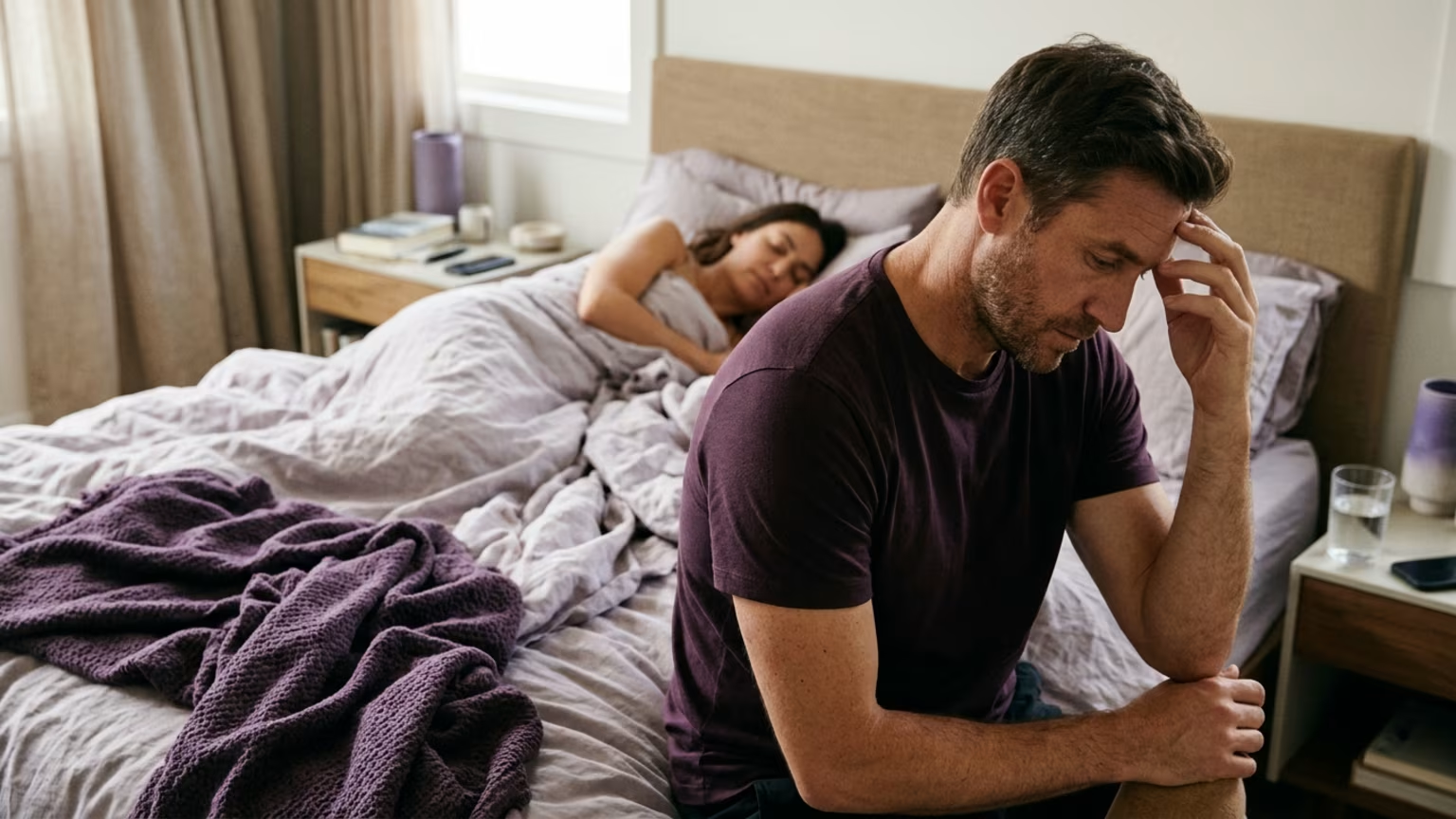

UPMC’s guidance connects stress with temporary erection difficulties. Learn how sleep, daily habits and broader health assessment fit the picture.





UPMC HealthBeat published “Can Stress Cause Erectile Dysfunction” on November 3, 2026. The page records its last review on the same date. Its guidance explains how acute stress may contribute to temporary erection difficulties and describes supportive habits involving sleep, movement and communication.
The article brings everyday pressures into a discussion that can otherwise become narrowly focused on sexual performance. Work demands and financial worries feature alongside relationship tension and anxiety about erections themselves.
The useful distinction is between recognizing stress as a possible contributor and treating it as the whole explanation. UPMC’s advice is best understood alongside clinical guidance that considers both psychological and physical health.
UPMC’s article is practical health education rather than a clinical trial or population survey. It does not report a recruited study population, a sample size or a follow-up period. There is no intervention group being compared with a control group.
Its scope is an explanation of stress-related erection difficulties and general suggestions for managing relevant daily habits. The intended use is understanding a concern and recognizing when further assessment matters, rather than measuring how well a particular treatment works.
The comparison here comes from the European Association of Urology’s guideline on erectile dysfunction. That document has a wider clinical scope. It addresses possible causes, assessment and management rather than focusing primarily on stress.
These are guidance-based sources, not a newly released experiment establishing cause and effect. Reading them together connects an accessible explanation with the broader questions clinicians consider.
UPMC describes several ways acute stress may interfere with erections. Distraction can pull attention away from a sexual experience. Anxiety and reduced confidence are also part of its explanation.
The article also discusses the body’s fight-or-flight response. In UPMC’s account, stress hormones such as cortisol may reduce blood flow, which is important to erections. This is the publication’s explanation of a possible pathway rather than a measured hormone effect reported in a new study.
That framing connects mental strain with a bodily response. It does not place emotional experience outside sexual health or treat it as less relevant than physical function.
UPMC lists work pressure and financial stress among possible contributors. It also names relationship tension, performance anxiety and poor sleep or diet.
These are presented as possible influences on temporary difficulties. UPMC says stress-related erection problems often improve as stress subsides. It distinguishes that pattern from recurring or persistent symptoms that may point to an underlying health issue.
UPMC’s suggestions cover several parts of daily life:
The emphasis is broader than trying to control an erection in the moment. UPMC places stress management within everyday routines and relationships, while retaining a role for professional assessment.
UPMC names no author or quoted clinician in this article. Its explanation should therefore be attributed to the publication rather than presented as an individual specialist’s assessment or a reported interview.
Neither source provides a statistic for how common stress-related erection difficulties are. They also do not quantify how much cortisol changes blood flow or what proportion of people improve after following UPMC’s suggestions. There is no supported percentage improvement to attach to this advice.
The recommendations also need to be read at the right level. Support for lifestyle changes overall does not establish that a particular sleep duration or reducing caffeine will independently resolve erectile dysfunction. UPMC’s description of improvement as stress eases is not a guarantee for an individual.
Cause is another important uncertainty. Stress may occur alongside poor sleep or other health concerns, so a difficulty appearing during a demanding period does not isolate its cause. The EAU guideline allows for several contributing pathways at once.
These limits keep the article useful as education without turning a general explanation into a personal diagnosis or a promise about recovery.
The EAU describes erectile dysfunction as a complex issue. Possible causes include vascular, hormonal, neurological and psychological factors. In everyday language, that means blood vessels and hormones belong in the assessment alongside nerve function and psychological influences.
This supports UPMC’s attention to stress but places it within a larger picture. The EAU recommends considering life stressors and cognitive factors as part of assessing sexual performance. It also calls for medical and sexual history, a focused physical examination and relevant laboratory evaluation.
Its recommended laboratory assessment includes glucose, lipids and testosterone. The point for readers is the breadth of the clinical process, not a list of tests to arrange independently. A clinician’s assessment brings the personal history and examination into the same discussion.
The EAU supports lifestyle modification as part of erectile dysfunction management. It specifically identifies regular exercise and reduced body mass index as changes that can improve erectile function. It recommends addressing lifestyle and risk factors before or alongside treatment.
That gives a wider evidence context to UPMC’s emphasis on movement. Our discussion of movement within sexual wellbeing considers this connection without treating exercise as a performance target.
The EAU lists diabetes and high blood pressure among associated risk factors. Cardiovascular disease and obesity also appear in its guidance, alongside smoking and lack of exercise. Depression, anxiety and sleep disorders are included too.
The guideline notes that erectile dysfunction shares risk factors with cardiovascular disease and may warrant evaluation for underlying conditions. This is the distinction behind viewing erectile changes as a health signal rather than a diagnosis.
Taken together, the two sources support daily habits and stress awareness within a broader approach to sexual health. They do not set lifestyle support and clinical care against each other.
The practical value of UPMC’s article is its focus on context. A useful account of an erection concern includes whether it has been occasional or recurring and whether it coincides with fatigue or particular pressures. Those details give a conversation more substance than a label such as “stress-related.”
For someone trying to organize that account, our resource on recognizing situational patterns offers related educational context. The purpose is to describe the experience clearly rather than decide its cause alone.
UPMC recommends honest communication with a partner. A discussion can center on what has changed and what each person has noticed. Stress and tiredness can be discussed without assigning blame or expecting either partner to produce an explanation.
This keeps the conversation connected to the actual concern. It also leaves room to talk about relationship tension when that is relevant, rather than assuming that every erection difficulty reflects a relationship problem.
UPMC advises a medical check-up for persistent symptoms. The EAU’s broader assessment approach explains why recurring difficulties deserve attention beyond stress alone. Qualified care is where personal history and possible contributing conditions can be considered together.
There is no need to choose between taking stress seriously and taking physical health seriously. The clearest reading of this guidance is that both belong in the discussion. Supportive routines can be considered alongside medical review rather than becoming a test someone must pass before raising a concern.
Today, write a brief note describing whether the difficulty has been occasional or recurring and what stress or fatigue was present around it.
Deciding how to frame an erection concern is where Sexential brings evidence-aware education to questions about stress and sexual function. For adults aged 35 to 65, its coverage puts hormonal and physical factors alongside psychological and relationship influences to support clearer understanding without diagnosing the cause or directing individual treatment.
Follow Sexential for thoughtful guidance on desire, sexual function, hormones, confidence, relationships and intimacy. Explore new articles and evidence-aware resources for sexual wellbeing across adulthood.


Canada’s new menopause funding supports research, mental health guidelines and inclusive care resources. Here’s how it relates to sexual wellbeing.


A urologist discusses painful sex, low desire and orgasm changes after 40, with practical questions to bring to a healthcare visit.

Learn how spontaneous and responsive desire differ, why timing alone doesn’t define libido, and how to talk about changes without pressure.
Explore practical resources on desire, function, hormones, confidence, intimacy and sexual wellbeing.
Read the Blog
