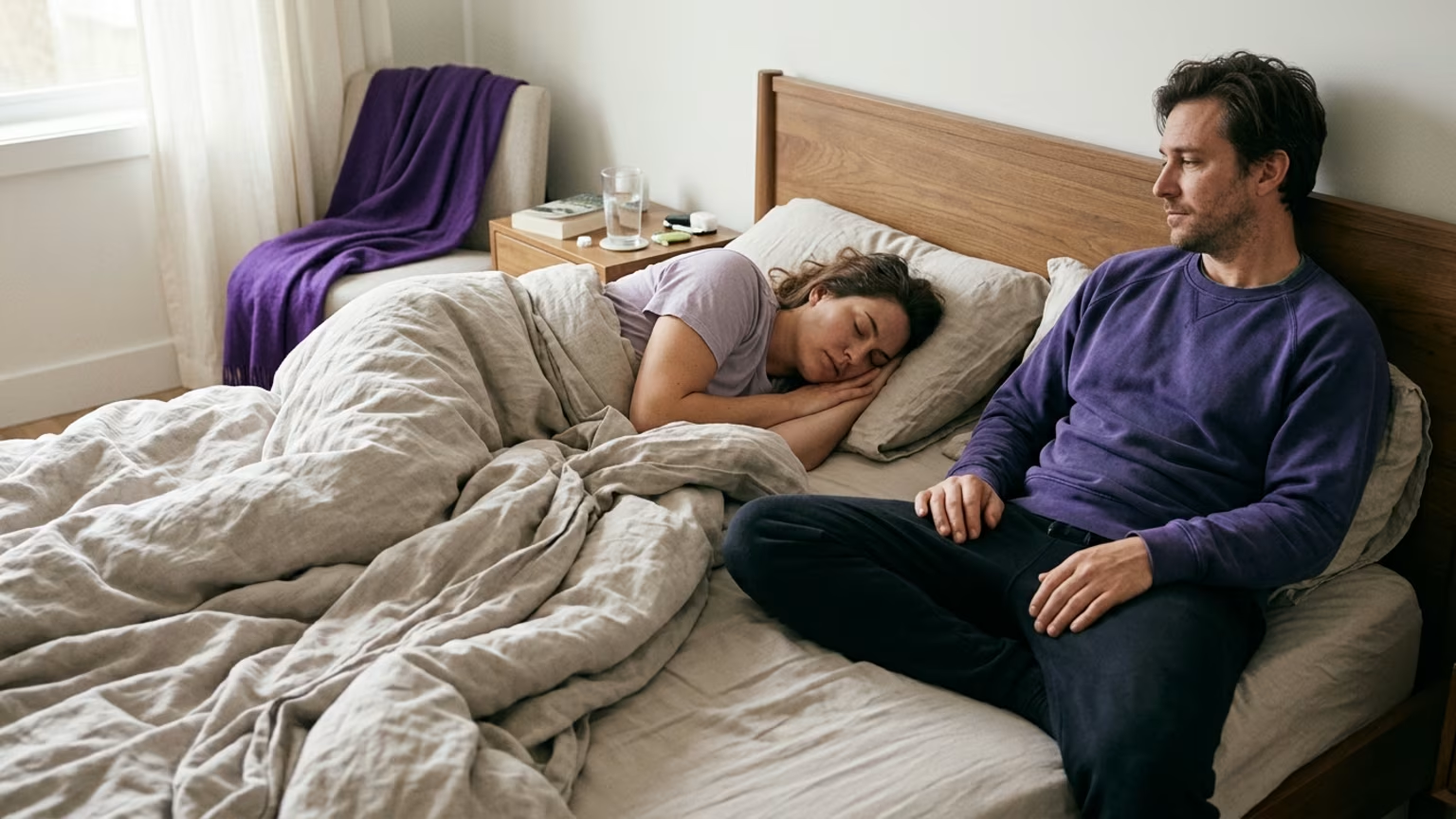

Missing sleep affects your mood, energy, and focus, which can change your interest in intimacy. Learn how better rest supports your sexual wellbeing in midlife.





A bed partner listening to loud snoring, gasping, or pauses in breathing is witnessing a crucial health signal. These nighttime interruptions do more than disturb a quiet room. They create a profound tension between chronic exhaustion and the energy needed for physical connection. For many adults, a severe lack of deep rest fundamentally changes their daily motivation.
Missing sleep alters how you feel and function during your waking hours. When your rest is consistently short, your overall mood and physical vitality will often decline. While this deep exhaustion can naturally reduce your immediate interest in physical closeness, a lack of sleep is rarely the sole cause of complex changes in sexual desire. Understanding how your baseline energy supports intimacy can help you address fatigue practically.
Sexual desire is not an isolated function that operates completely independently of your overall health. Your interest in physical intimacy relies heavily on your emotional state and your basic energy reserves. When you consistently miss out on deep rest, your body naturally prioritizes basic recovery over sexual motivation. This biological reality means that a temporary drop in desire often signals general exhaustion rather than a fundamental relationship problem.
The connection between feeling well-rested and feeling sexual is a normal part of human biology. It is incredibly common for people to mistake simple physical fatigue for a sudden or permanent loss of libido. When you lack physical energy, the mere effort required for affection can feel completely overwhelming. Recognizing this difference helps prevent unnecessary worry about your own sexual function. For more perspective on these shifts, review our guide on how overall physical wellness drives intimacy rather than just age.
Viewing desire through the lens of daily energy removes the pressure to perform when you are depleted. Your body uses the night to repair physical tissue and regulate essential internal systems. If those vital processes are cut short, you will naturally have far less capacity for engaging with a partner. Acknowledging this biological limitation is an important first step toward managing your own expectations.
When you are severely tired, even a simple conversation about your physical needs can feel impossible. This lack of communication can slowly create emotional distance in a relationship, which further reduces intimacy over time. Separating your physical tiredness from your actual feelings for your partner requires honest and patient reflection. Acknowledging physical fatigue as a barrier helps couples avoid taking a lack of interest personally.
Many common elements of daily adult life can disrupt the quality and overall duration of your sleep. Your work schedule often dictates when you can rest, and stressful routines can make winding down very difficult. Even small habits in the hours immediately before bed can significantly alter how well you sleep. Recognizing these lifestyle factors allows you to make practical adjustments to your evening routine.
Your physical environment plays a major role in determining your overall sleep quality. A noisy or overly warm bedroom can easily prevent you from reaching the deeper stages of physical rest. The lighting in your home during the evening also sends powerful signals to your brain. Managing these environmental details can make a highly noticeable difference in your morning energy levels.
Substances consumed late in the day frequently interfere with essential physical recovery. Caffeine and nicotine are strong stimulants that can keep your nervous system alert long after you try to rest. Similarly, consuming alcohol before bed might make you feel drowsy initially, but it often leads to highly fragmented sleep later. Limiting these inputs can create a much better foundation for both deep rest and physical intimacy. If you are noticing shifting patterns, reading what the evidence shows about sleep and midlife intimacy can provide further context.
Your daytime habits also influence how easily you fall asleep when the day is done. The National Institutes of Health (NIH) recommends seeking natural daylight during the day. Getting outside helps regulate your biological clock, which dictates your alertness during the day and your drowsiness at night. When adults spend their entire day indoors, they miss these crucial environmental cues entirely.
Stress from work or family obligations is another major factor that can disrupt your evening routine. When your mind is occupied with unresolved problems, your nervous system remains in a heightened state of alert. This lingering stress makes it incredibly difficult to relax physically and transition into a restful state. Finding ways to mentally detach from the day is just as important as setting up a dark room.
The available medical evidence clearly links sleep duration to daytime functioning and emotional regulation. According to the NIH, cutting your sleep by even an hour can make focusing harder and slow your response time. This loss of focus can make it quite difficult to stay fully present during intimate moments with a partner. A distracted mind rarely transitions easily into a state of physical arousal.
The NIH also notes that insufficient sleep can make people highly irritable. Feeling irritable naturally makes connecting with a partner much more challenging on a daily basis. When you lack patience, you are far less likely to initiate or enjoy physical affection. This emotional friction can easily bleed into the bedroom and reduce your overall sexual motivation.
Furthermore, the NIH points out that chronic sleep loss is associated with a greater risk of depression. These significant mood changes can deeply suppress your interest in physical closeness over time. A depressed mood fundamentally alters how you perceive pleasure, motivation, and interpersonal connection. It is important to remember that these general symptoms affect every adult differently.
There is no single rule that proves sleep loss dictates an individual's specific erectile response or physical arousal. Instead, the established medical consensus highlights how healthy sleep supports your overall physical and mental baseline. When that physical baseline is strong, you are generally more receptive to emotional and physical connection. If you are struggling with varying levels of physical interest, reviewing how partners can navigate intimacy mismatches when physical interest develops at different speeds can be helpful.
Improving your rest starts with adjusting your daily habits rather than immediately seeking a medical cure. The NIH recommends establishing a regular bedtime and a regular wake time to stabilize your internal clock. Consistency helps your body accurately anticipate when it is time to begin winding down. This predictable rhythm can improve the overall efficiency and quality of your time in bed.
Creating a dedicated sleep-friendly space is another highly practical step you can take tonight. The NIH recommends maintaining a quiet, cool, and dark bedroom to promote uninterrupted physical rest. The physical comfort of your room signals to your brain that the active day is finally over. You should also try limiting your exposure to screens for about an hour before you go to bed.
The artificial light from phones and televisions mimics daylight, which easily confuses your biological clock. When you limit screens before bed, your brain can begin its natural transition into rest mode. Replacing screen time with reading or a quiet conversation can significantly lower your daily mental stimulation. This quiet period is absolutely essential for busy adults who carry high levels of daily stress.
You can also protect your evening rest by managing what you consume during the afternoon and evening. The NIH recommends explicitly avoiding caffeine and nicotine later in the day. It also recommends avoiding alcohol before bed to prevent unwanted late-night awakenings. Making these deliberate small adjustments can slowly rebuild your physical energy reserves over a few weeks.
Establishing these habits may require patience before you find what works best for your schedule. Not every suggestion will fit seamlessly into your existing evening routine. You might need to experiment with different room temperatures or lighting setups to find your ideal environment. The goal is to build a personalized approach that consistently supports your physical recovery without causing additional stress.
As your daily energy gradually improves, you may notice a slow shift in your capacity for intimacy. Remember that rebuilding a physical connection takes time, patience, and clear communication with your partner. Do not expect an immediate surge in libido just because you slept well for a single night. Treat these sleep-supporting habits as a long-term investment in your health, and read why separating biological reactions from mental drive helps clarify these shifts to understand the process.
While lifestyle changes can resolve many common sleep disruptions, some issues require a proper clinical assessment. The NIH lists persistent trouble sleeping despite trying sleep-improvement measures as a reason to seek care. If you are consistently unable to rest, a doctor can help identify deeper underlying biological causes. Ignoring long-term sleep deprivation can deeply compromise both your general health and your sexual wellbeing.
Certain physical symptoms during the night also strongly warrant professional medical input. The NIH advises talking with a healthcare provider if a bed partner reports loud snoring. You should also seek medical advice if a partner notices gasping, choking, snorting or breathing pauses. These specific physical signs often point to biological conditions that cannot be fixed by a darker room.
Frequent daytime sleepiness is another very important signal that your nightly rest is fundamentally inadequate. If you find yourself constantly struggling to stay awake, it is time to consult a medical professional. Addressing these severe symptoms can profoundly improve your overall quality of life and restore your relational energy. As a single step for tonight, look at your evening routine and choose one screen-free activity to do before bed.
Determining whether persistent exhaustion is suppressing your physical desire or simply pointing to poor sleep habits requires careful evaluation, and Sexential provides the necessary context for this distinction. We solve your difficulty separating hormonal, physical, psychological and relationship factors, ensuring you can build a factual foundation for better intimate health. Explore Resources
Follow Sexential for thoughtful guidance on desire, sexual function, hormones, confidence, relationships and intimacy. Explore new articles and evidence-aware resources for sexual wellbeing across adulthood.


A report on a student survey links attention with men’s sexual satisfaction. Here’s the evidence, its limits and the practical context for midlife.

A new report puts men’s midlife testosterone changes in context, with guidance on assessment, partner conversations and fertility considerations.

The Menopause Society’s 2026 program places lifestyle, sleep and sexual health together. Here is what the agenda and partner research actually report.
Explore practical resources on desire, function, hormones, confidence, intimacy and sexual wellbeing.
Read the Blog