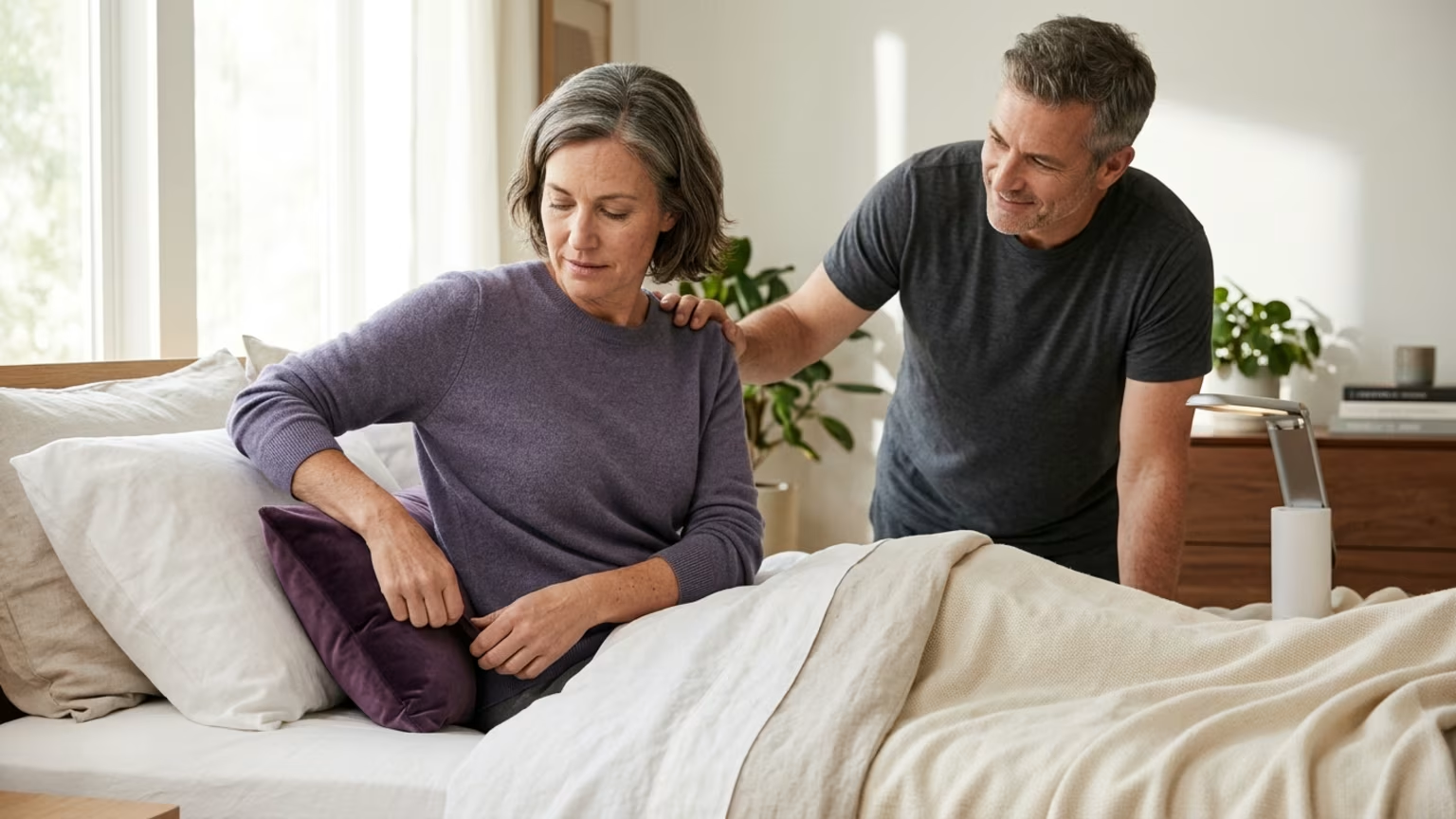

A September 2026 HuffPost feature offers practical adjustments for women navigating changes in sexual comfort and arousal after 40 without relying on hype.





Physical intimacy evolves continuously throughout adulthood, requiring individuals to adapt their habits and expectations as their bodies mature. As physiological systems shift over time, many adults find that their physical responses no longer match their experiences from earlier decades. Recent commentary published in a major media outlet offers a highly practical framework for navigating these physical shifts. The guidance focuses entirely on adjusting pacing and communication rather than pursuing immediate medical interventions for every observed change.
On September 30, 2026, a new perspective on female sexual wellbeing was introduced to the general public. The search result dates the publication to this specific day, though the page content retrieved does not explicitly state a publication date. The verified primary article is a HuffPost feature titled “Small Changes Women Can Make For Better Sex Over 40 (That Have Nothing To Do With Lube).” This publication focuses closely on practical adjustments for women who are actively navigating changes in arousal and physical comfort.
The article gathers comprehensive commentary from a variety of credentialed professionals rather than announcing a new clinical trial or medical breakthrough. It formally presents recommendations from contributors identified as a licensed marriage and family therapist, a sex educator, a sexologist, and others. The guidance relies heavily on expert commentary and personal experience, framing sexual shifts as completely normal transitions. It shifts the prevailing narrative away from treating natural physical changes purely as medical problems that require complex interventions.
Understanding the precise design and scope of the information provided in the HuffPost feature is essential for readers. The publication is not a formal clinical guideline, nor does it serve as a diagnostic tool for treating sexual dysfunction. Instead, the advice is reported as expert commentary and personal experience directed at a broad, mature audience. The article contains absolutely no quantified clinical evidence, survey results, or trial data establishing how common these specific changes are.
It also lacks empirical measurements regarding the overall effectiveness or success rates of the various approaches it discusses. This qualitative approach provides valuable conversational context, but it does not establish universal clinical rules for the general public. The demographic of women over 40 represents a vast and diverse group of individuals with highly varied physical experiences and needs. The article explicitly acknowledges this inherent diversity by presenting its suggestions as optional adjustments rather than strict, unyielding mandates.
Because there is no comparative clinical evidence included in the text, the feature cannot prove that any specific technique or product is scientifically superior. The specific insights provided by the sexologist, the sex educator, and the therapist reflect their own professional observations and conversations. These observations are quite useful for normalizing the dialogue around changing physical responses, but they do not carry the same foundational weight as peer-reviewed medical research. Readers are encouraged to view the provided advice as a starting point for personal observation rather than a definitive medical roadmap.
The central practical advice in the feature focuses heavily on deliberately adjusting the speed and style of physical connection. The article’s therapist contributor, Ilana Grines, notes that physiological shifts significantly impact how the physical body reacts to intimacy. Specifically, she points out that hormonal and physiological changes can noticeably affect tissue sensitivity, lubrication, and overall arousal. Because of these distinct biological factors, physiological arousal may take significantly longer to build for some women as they age.
To address this reality, Grines specifically recommends slowing the first part of sexual interactions to accommodate changing physical needs. She advises individuals to allow more buildup, touch, and time during the early stages of physical intimacy. This intentional approach prioritizes current comfort and natural pacing over past expectations or rushed, goal-oriented routines. Removing the intense pressure to perform is another crucial element in the expert commentary provided by Grines.
She recommends observing what feels pleasurable without the pressure to achieve an orgasm or adhere to a strict, fixed time limit. The feature also addresses situations where simple pacing adjustments are simply not enough to ensure physical comfort and pleasure. For persistent dryness or irritation, the article includes a detailed personal account from a contributor named Emily Mendez. Mendez shared that she experienced ongoing symptoms that actively interfered with her ability to enjoy physical intimacy comfortably.
She stated that she discussed these specific symptoms with her OB-GYN to find an appropriate, medically sound solution. Following this consultation, she received a prescription estrogen cream and also found a vaginal moisturizer to be highly helpful. In addition to behavioral adjustments and medical consultations, the article references several specific commercial products available on the market. Its product references include URO vaginal moisture and mood capsules, the Womanizer Next Liberty device, and the Cooch Ball.
These items are presented alongside practitioner or personal endorsements rather than being backed by independent, objective efficacy data. They represent potential tools for individuals looking to actively address changes in physical comfort and their overall physiological response.
While the HuffPost article offers supportive and practical advice, its reliance on personal accounts introduces very important limitations. The guidance and product mentions scattered throughout the text are not backed by independent clinical trials or broad demographic statistics. A personal testimonial about a specific device, pelvic-floor product, or supplement simply does not establish that it is safe or effective for everyone. The specific experiences shared by the contributors reflect highly individualized outcomes rather than guaranteed clinical success rates for the general population.
Mendez’s experience with prescription estrogen cream serves as a single personal account rather than a universal medical recommendation for all women. Readers should never infer that this specific hormonal treatment is automatically appropriate, safe, or necessary for every person experiencing dryness. Prescription medications always require individual medical assessment by a professional to properly weigh potential benefits against personal health risks. Furthermore, the article itself specifically advises consulting a doctor before adding the named URO capsules to a daily health regimen.
The broader statements regarding changes in female arousal also lack concrete statistical backing within the text of this specific publication. The article does not provide any survey data to establish exactly how common these physiological shifts are among the population. The suggestions to try different forms of touch are presented without comparative clinical evidence to prove their effectiveness over other available methods. Therefore, the recommendations remain largely observational, highly subjective, and deeply dependent on individual physical preferences and comfort levels.
The insights drawn from this HuffPost feature fit naturally into the broader educational landscape concerning midlife and aging. Framing changes in tissue sensitivity and arousal as normal physiological events helps reduce unnecessary anxiety and relationship strain. The suggestion to consciously focus on extended touch and buildup reflects a healthy shift away from rigidly defined ideas of intimacy. This calm, observant approach closely mirrors the standard educational themes found throughout modern women's sexual wellness resources.
The clear distinction between making practical lifestyle adjustments and seeking formal medical intervention is well maintained in the feature. While taking more time can certainly improve comfort, the article rightly points readers toward professional help for persistent, unresolved pain. This aligns perfectly with the established medical position that significant, ongoing discomfort warrants a thorough evaluation by an OB-GYN. Relying on open dialogue with healthcare providers remains a crucial step when basic behavioral adjustments do not fully resolve physical irritation.
Readers noticing distinct changes in their own arousal patterns can consider adopting a slower pace without feeling rushed or inadequate. Treating the need for more time as a simple logistical adjustment can help prevent performance anxiety from interfering with physical pleasure. Individuals might benefit significantly from focusing on what feels comfortable right now instead of trying to strictly force past routines. Discussing these changing preferences through calm, honest couples communication helps partners stay closely aligned and deeply supportive.
If non-prescriptive behavioral adjustments do not fully resolve physical discomfort, seeking professional medical advice is a highly logical next step. Persistent dryness or irritation that actively interferes with connection always warrants a thorough conversation with a qualified OB-GYN. Readers should always approach product endorsements carefully and discuss any new supplements with a doctor prior to beginning use. Viewing these physical shifts methodically allows individuals to focus on connection rather than falling into patterns of frustration.
Recognizing that our physical responses change over time does not mean intimacy has to diminish. It simply means that the ways we connect must evolve alongside us, allowing comfort and mutual understanding to guide the experience.
Anxiety or loss of confidence around changing sexual experiences often causes partners to withdraw from physical closeness. Sexential serves adults aged 35 to 65 by providing calm, evidence-aware education about aging and physical desire, helping individuals address these natural shifts without sensationalism or medical alarm.
Follow Sexential for thoughtful guidance on desire, sexual function, hormones, confidence, relationships and intimacy. Explore new articles and evidence-aware resources for sexual wellbeing across adulthood.



Navigate intimacy invitations and declines with clarity. Learn practical ways to communicate boundaries and reduce tension in long-term relationships.


Learn how menopause changes physical intimacy, the difference between dryness and desire, and practical options to improve comfort and sexual wellbeing.

Research shows age is just one factor in sexual function. Read how health, medications, and relationship dynamics influence your physical response over time.
Explore practical resources on desire, function, hormones, confidence, intimacy and sexual wellbeing.
Read the Blog